
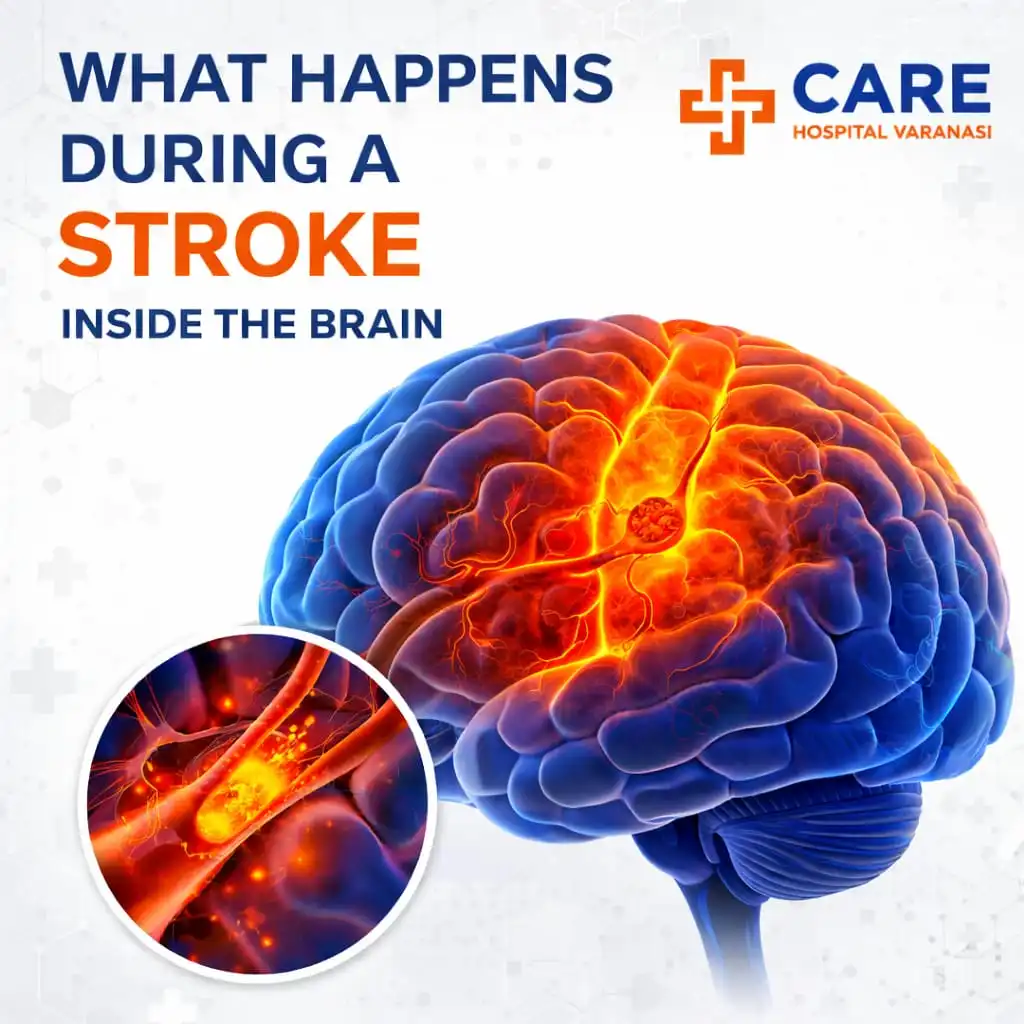
Strokes are one of the most frightening medical emergencies anyone can face. Often referred to as a “brain attack,” a stroke strikes suddenly and can change lives in an instant. But what exactly happens during a stroke inside the brain? This question is crucial for understanding not just the event itself, but also why quick action is so vital. In this comprehensive article, we’ll dive deep into the intricate processes that unfold within the brain during a stroke, breaking down the science in a way that’s easy to grasp. Whether you’re curious about brain stroke symptoms, the causes, or how to prevent one, we’ll cover it all while keeping things user-friendly and informative.
Imagine your brain as the command center of your body—a bustling hub of billions of neurons firing signals to control everything from your heartbeat to your thoughts. When a stroke hits, it’s like a sudden blackout in that hub, cutting off essential power. A stroke occurs when blood flow to part of the brain is interrupted, either by a blockage or a burst vessel, leading to rapid cell death. This deprivation of oxygen and nutrients can cause irreversible damage within minutes, making strokes a leading cause of disability and death worldwide. In fact, every year, millions experience this, and knowing what happens can empower you to recognize warning signs early.
We’ll explore the types of strokes, the step-by-step events inside the brain, the immediate and long-term effects, risk factors, prevention strategies, and treatment options. By the end, you’ll have a clear picture of this complex condition. If you’re in Varanasi or nearby and concerned about neurological health or stroke emergencies, seeking care at a trusted facility can make all the difference.
The Brain’s Vital Lifeline: Blood Supply and Why It Matters
To understand what happens during a stroke in the brain, we first need to appreciate how the brain works normally. The human brain is an energy-hungry organ, weighing about three pounds but consuming around 20% of the body’s oxygen and glucose. It relies on a constant supply of blood delivered through a network of arteries, including the carotid and vertebral arteries that branch into smaller vessels.
Blood carries oxygen, nutrients, and removes waste products, keeping brain cells (neurons) alive and functioning. Neurons communicate via electrical impulses and chemicals called neurotransmitters, enabling us to think, move, and feel. The brain is divided into regions like the cerebrum (for higher functions), cerebellum (for balance), and brainstem (for vital functions like breathing).
Any disruption in blood flow starves these cells. Brain cells can survive only about four to six minutes without oxygen before they begin to die—a process called ischemia. This vulnerability explains why strokes are so devastating. In essence, a stroke isn’t just an event; it’s a cascade of failures in this delicate system.
Consider the blood-brain barrier, a protective shield that regulates what enters the brain from the bloodstream. During normal operation, it keeps harmful substances out while allowing essentials in. But when blood flow halts, this balance shatters, leading to inflammation and further damage. Understanding this foundation helps us see why even a brief interruption can have profound effects.
Types of Strokes: The Two Main Culprits
Not all strokes are the same, and knowing the types is key to grasping what happens inside the brain. Broadly, there are two primary categories: ischemic and hemorrhagic strokes, plus a temporary version called transient ischemic attack (TIA).
Ischemic Stroke: The Blockage That Starves the Brain
Accounting for about 87% of all strokes, ischemic strokes happen when a blood clot or plaque buildup blocks an artery, preventing blood from reaching brain tissue. This is like a traffic jam on a highway, where nothing gets through.
There are subtypes: thrombotic (clot forms in a brain artery) and embolic (clot travels from elsewhere, like the heart). Regardless, the result is the same—oxygen deprivation.
Hemorrhagic Stroke: The Rupture That Floods the Brain
Less common but often more severe, hemorrhagic strokes occur when a weakened blood vessel bursts, leaking blood into or around the brain. This can be intracerebral (inside the brain) or subarachnoid (on the surface). High blood pressure is a major culprit, weakening vessel walls over time.
Transient Ischemic Attack (TIA): A Warning Sign
Often called a “mini-stroke,” a TIA is a brief blockage that resolves quickly, usually within minutes to hours. No permanent damage occurs, but it’s a red flag for a full stroke risk. Think of it as a rehearsal—ignore it at your peril.
Each type sets off different chains of events in the brain, which we’ll explore next.
What Happens During an Ischemic Stroke: A Minute-by-Minute Breakdown
Let’s zoom in on the most common type. What happens during an ischemic stroke inside the brain is a rapid sequence of cellular chaos.
It starts with the blockage. A clot lodges in an artery, cutting off blood flow to a specific brain area. Within seconds, neurons in that region sense the oxygen drop and switch to anaerobic metabolism—a backup mode that produces less energy and builds up lactic acid, acidifying the environment.
By the one-minute mark, electrical activity falters. Neurons stop firing properly, leading to immediate symptoms like weakness or confusion. The “penumbra,” or surrounding tissue, is at risk but salvageable if blood flow resumes quickly.
At three to five minutes, cell membranes break down. Without ATP (energy molecules), ion pumps fail, causing sodium and calcium to flood cells, swelling them (cytotoxic edema). This swelling compresses nearby vessels, worsening the ischemia.
By 10-20 minutes, irreversible damage begins. Mitochondria, the cell’s powerhouses, fail, releasing toxins that trigger apoptosis (programmed cell death). Inflammation ramps up as immune cells rush in, but they can cause more harm by releasing free radicals—unstable molecules that damage DNA and proteins.
Hours later, the infarct (dead tissue) forms. The brain’s glial cells try to contain the damage, but scar tissue replaces functional neurons. Depending on the location, this could affect motor control (if in the motor cortex) or speech (if in Broca’s area).
For example, if the blockage is in the middle cerebral artery, which supplies much of the brain’s outer layer, it can lead to hemiplegia (paralysis on one side) and aphasia (language issues). The cascade doesn’t stop; secondary effects like seizures or edema can follow days later.
Analogies help: It’s like a city blackout where lights flicker out block by block, and without power restoration, buildings collapse.
What Happens During a Hemorrhagic Stroke: The Pressure Build-Up
Now, contrast that with a hemorrhagic stroke, where the issue is excess blood rather than lack of it.
It begins with a vessel rupture, often due to an aneurysm (bulging weak spot) or arteriovenous malformation. Blood spills into brain tissue or spaces around it, creating a hematoma (blood pool).
Immediately, the leaked blood irritates brain tissue, causing vasogenic edema—fluid leakage from vessels, swelling the brain. This increases intracranial pressure, squeezing healthy areas and potentially herniating (pushing) brain parts through skull openings, which can be fatal.
Within minutes, the blood’s iron and other components trigger oxidative stress, damaging neurons via free radicals. Clotting factors try to stop the bleed, but if unsuccessful, the hematoma grows, displacing brain structures.
By 30 minutes to hours, secondary ischemia occurs because the pressure compresses arteries, cutting off blood to other regions. Inflammation peaks, with microglia (brain’s immune cells) activating but overdoing it, leading to more cell death.
Longer term, the blood breaks down into bilirubin and other byproducts, which can cause seizures or hydrocephalus (fluid buildup blocking cerebrospinal fluid flow).
Symptoms are often explosive: severe headache, vomiting, and rapid neurological decline. If in the brainstem, it can stop breathing instantly.
In subarachnoid hemorrhage, blood floods the space between brain and skull, irritating meninges and causing neck stiffness.
This type is deadlier, with higher mortality rates, emphasizing why controlling blood pressure is crucial.
Immediate Effects and Brain Stroke Symptoms
Regardless of type, the brain’s response leads to telltale signs. Symptoms depend on the affected area but often include:
- Sudden numbness or weakness, especially on one side (face, arm, leg).
- Confusion, trouble speaking or understanding.
- Vision problems in one or both eyes.
- Dizziness, loss of balance, or coordination issues.
- Severe headache with no known cause.
Remember the acronym FAST: Face drooping, Arm weakness, Speech difficulty, Time to call emergency.
Inside the brain, these stem from dying neurons disrupting circuits. For instance, a left-brain stroke might impair language, while right-side affects spatial awareness.
Emotional effects can hit too—frustration or depression as pathways for mood regulation falter.
Long-Term Effects: The Road to Recovery
Post-stroke, the brain shows plasticity—its ability to rewire. Surviving neurons can take over lost functions, but challenges persist.
Physical: Paralysis, chronic pain, or swallowing difficulties.
Cognitive: Memory loss, attention deficits, or executive function issues.
Emotional: Post-stroke depression affects up to 30%, due to chemical imbalances.
Rehabilitation helps, but full recovery varies. Some regain independence; others need lifelong support. Specialized neurorehabilitation, including physical therapy, speech therapy, and occupational therapy, is essential for rebuilding skills and improving quality of life.
Risk Factors and Prevention: Taking Control
Risks include high blood pressure, smoking, diabetes, obesity, atrial fibrillation, and family history. Age and gender play roles—men earlier, women later in life.
Prevention: Maintain healthy blood pressure, exercise, eat a balanced diet, quit smoking, and manage cholesterol. Regular check-ups catch issues early.
Aspirin or anticoagulants for high-risk individuals can help prevent clots.
Treatment Options: Acting Fast Saves Brains
Time is brain—every minute counts. For ischemic strokes, clot-busters like tPA within 4.5 hours dissolve blockages. Mechanical thrombectomy removes clots surgically.
For hemorrhagic strokes, surgery to repair vessels or drain blood, along with medications to control pressure, is often required.
Seeking immediate care at a specialized facility is key. In Varanasi, residents can access advanced stroke care, including emergency interventions and neurocritical support, at the best hospital in Varanasi, which offers 24/7 emergency services, modern diagnostics (like 3 Tesla MRI and 128-Slice CT), and a multidisciplinary team for neurological emergencies.
For those requiring surgical expertise—such as clot removal, aneurysm repair, or post-stroke complications—neuro and spinal surgery in Varanasi provides cutting-edge options like minimally invasive techniques, neuronavigation, intraoperative monitoring, and comprehensive neurorehabilitation. Facilities equipped with these technologies and experienced neurosurgeons can significantly improve outcomes for stroke patients.
Conclusion: Knowledge as Your Best Defense
Understanding what happens during a stroke inside the brain demystifies this terrifying event. From the initial blockage or rupture to the cascading cell death and potential recovery, it’s a reminder of our brain’s fragility and resilience. By recognizing symptoms and acting fast, lives can be saved. Prioritize health, manage risk factors, and if needed, consult professionals at a trusted center—your brain deserves it.