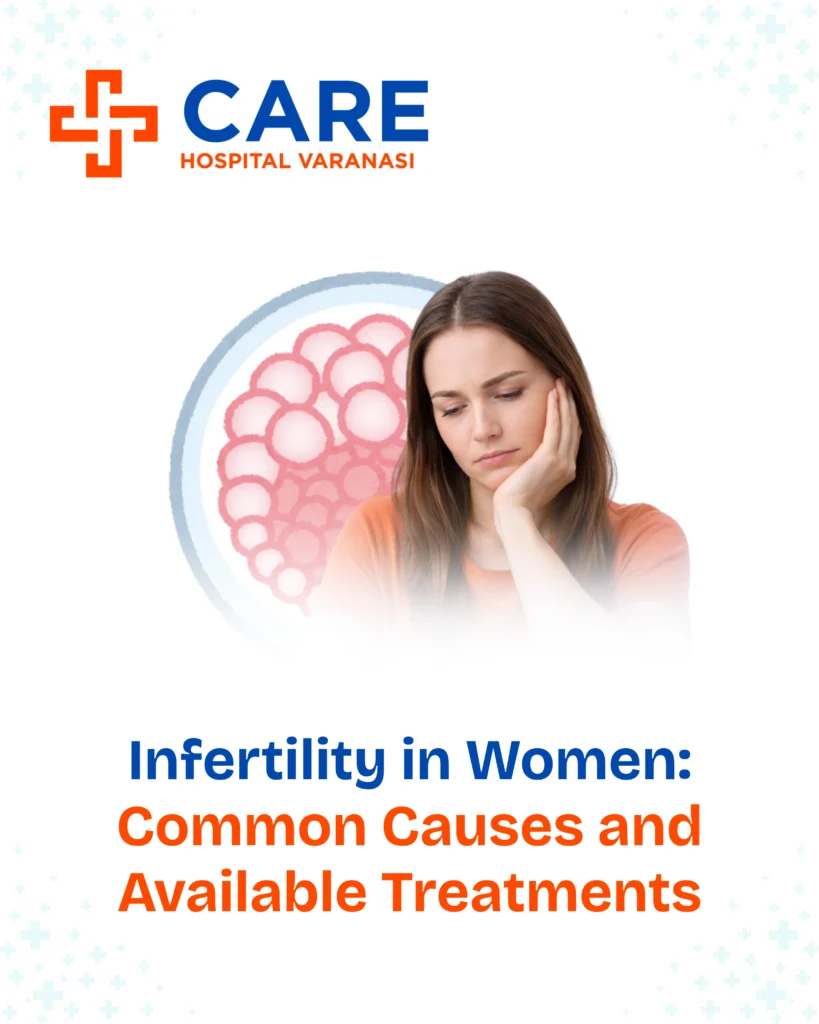
Infertility affects millions of couples worldwide, and for women, it can be an emotionally challenging journey. Defined as the inability to conceive after one year of unprotected intercourse (or six months if over 35), infertility isn’t just a medical issue—it’s a deeply personal one that impacts self-esteem, relationships, and life plans. In India, where family plays a central role, the stigma around infertility can add extra pressure. But here’s the good news: advances in medical science mean that many causes are treatable, and options like IVF are more accessible than ever.
If you’re in Varanasi or surrounding areas like Prayagraj, seeking expert care is crucial. At Care Hospital Varanasi, recognized as one of the best hospitals in Varanasi, our dedicated team specializes in women’s health, offering compassionate support and cutting-edge treatments. Led by specialists like Dr. Madhulika Rai, a renowned Gynecologist and IVF expert, we help women navigate infertility with personalized plans. In this in-depth guide, we’ll explore the common causes of infertility in women, diagnostic steps, and available treatments, empowering you with knowledge to take the next step.
What Is Infertility in Women?
Infertility in women occurs when there’s difficulty in getting pregnant or carrying a pregnancy to term. It’s not always solely a “woman’s issue”—about 40% of cases involve female factors, 40% male, and 20% a combination or unexplained. Globally, the World Health Organization (WHO) estimates that 15% of couples face infertility, with similar rates in India.
For women, fertility peaks in the early 20s and declines after 30, dropping sharply after 35. This biological clock is influenced by egg quantity and quality. Understanding this helps demystify why some women conceive easily while others struggle. If you’re experiencing this, know you’re not alone—many find solutions through timely intervention.
At Care Hospital Varanasi, our Obstetrics and Gynecology in Varanasi department provides comprehensive evaluations to identify root causes early. Whether it’s your first concern or you’ve been trying for years, starting with a consultation can open doors to parenthood.
Common Causes of Infertility in Women
Infertility stems from various factors, often interconnected. Let’s break down the most prevalent ones, backed by medical insights, to help you recognize potential signs.
1. Ovulatory Disorders
Ovulation issues account for about 25% of female infertility cases. This happens when eggs aren’t released regularly from the ovaries.
- Polycystic Ovary Syndrome (PCOS): A hormonal imbalance affecting 1 in 10 women of reproductive age. Symptoms include irregular periods, excess hair growth, acne, and weight gain. PCOS leads to multiple small cysts on ovaries, disrupting ovulation. Insulin resistance often plays a role, making weight management key.
- Hypothalamic Dysfunction: Stress, extreme weight loss, or excessive exercise can disrupt the hypothalamus-pituitary-ovarian axis, leading to absent periods (amenorrhea).
- Premature Ovarian Insufficiency (POI): Also called early menopause, where ovaries fail before age 40 due to genetics, autoimmune diseases, or chemotherapy.
Signs to watch: Irregular cycles (fewer than 9 periods a year), no periods, or very light/heavy bleeding. If these sound familiar, consult a specialist. Care Hospital Varanasi offers advanced hormone testing and ultrasound to diagnose these promptly.
2. Tubal and Uterine Factors
Blockages or abnormalities in the fallopian tubes or uterus prevent sperm from meeting the egg or implantation.
- Blocked Fallopian Tubes: Often from pelvic inflammatory disease (PID), caused by untreated STIs like chlamydia or gonorrhea. Endometriosis or past surgeries (e.g., ectopic pregnancy) can scar tubes.
- Uterine Fibroids: Non-cancerous growths in the uterus affecting 20-80% of women by age 50. They can distort the uterine cavity, hindering implantation.
- Endometriosis: Affecting 10% of women, this condition involves uterine-like tissue growing outside the uterus, causing pain, inflammation, and scarring. It impacts fertility by blocking tubes or affecting egg quality.
Diagnosis often involves hysterosalpingography (HSG) or laparoscopy. In Varanasi, our hospital’s minimally invasive procedures minimize recovery time.
3. Age-Related Decline
Age is a major factor—women are born with about 1-2 million eggs, dropping to 300,000 by puberty, and quality declines with time. By 35, fertility halves compared to the 20s; by 40, chances drop to 5% per cycle.
Why? Chromosomal abnormalities in eggs increase, raising miscarriage risks. Lifestyle factors like delayed marriage in urban India exacerbate this.
4. Lifestyle and Environmental Influences
Modern life contributes significantly:
- Weight Issues: Obesity (BMI >30) disrupts hormones; underweight (BMI <18.5) halts ovulation. A 5-10% weight change can restore fertility.
- Smoking and Alcohol: Smoking accelerates egg loss; excessive alcohol affects hormone balance.
- Environmental Toxins: Exposure to pesticides, chemicals, or radiation in certain jobs.
- Stress: Chronic stress elevates cortisol, suppressing reproductive hormones.
Adopting healthier habits can improve outcomes. Our nutritionists at Care Hospital Varanasi provide tailored plans for fertility enhancement.
5. Unexplained Infertility and Other Causes
In 10-20% of cases, no clear cause is found after tests. Other factors include thyroid disorders, diabetes, or celiac disease affecting absorption. Male factors, like low sperm count, should also be checked—couples’ evaluations are standard.
If you’re facing unexplained infertility, don’t lose hope. Advanced diagnostics at facilities like our IVF center in Varanasi can uncover subtle issues.
Diagnosing Infertility: The First Step
Diagnosis starts with a thorough history and physical exam. Key tests include:
- Hormone Levels: Blood tests for FSH, LH, estrogen, progesterone, AMH (anti-Müllerian hormone) to assess ovarian reserve.
- Ultrasound: Transvaginal scans to check ovaries, uterus, and follicles.
- HSG: Dye test to visualize tubes.
- Semen Analysis: For the partner.
- Laparoscopy: If surgery is suspected.
These are typically done over a cycle. At Care Hospital Varanasi, as the best hospital in Varanasi for multispecialty care, we integrate endocrinology and radiology for accurate results. Early diagnosis boosts success rates—don’t delay if you’ve been trying unsuccessfully.
Available Treatments for Infertility in Women
Treatments range from simple lifestyle tweaks to advanced assisted reproductive technologies (ART). Success depends on cause, age, and health.
1. Lifestyle Modifications and Natural Approaches
Start here for many cases:
- Diet and Exercise: Focus on balanced meals with antioxidants (fruits, veggies, nuts). Aim for 150 minutes of moderate exercise weekly.
- Weight Management: Achieving a healthy BMI can resume ovulation in PCOS.
- Stress Reduction: Yoga, meditation, or counseling. Apps like Headspace help.
- Supplements: Folic acid, CoQ10, or inositol for PCOS, under medical guidance.
These are low-cost and effective for 10-15% of couples.
2. Medications
- Ovulation Induction: Clomiphene citrate (Clomid) or letrozole stimulates egg release. Used for PCOS or unexplained cases.
- Hormone Therapy: For thyroid or progesterone deficiencies.
- Metformin: For insulin-resistant PCOS.
Monitoring via ultrasound prevents multiples. Side effects are mild, like hot flashes.
3. Surgical Interventions
- Laparoscopic Surgery: Removes fibroids, cysts, or endometriosis tissue. Tubal repair for blockages.
- Hysteroscopy: Corrects uterine abnormalities.
Minimally invasive options at Care Hospital Varanasi ensure quick recovery, with high success in restoring fertility.
4. Assisted Reproductive Technologies (ART)
When basics don’t work, ART steps in.
- Intrauterine Insemination (IUI): Sperm is placed directly in the uterus during ovulation. Ideal for mild male issues or unexplained infertility. Success: 10-20% per cycle.
- In Vitro Fertilization (IVF): Eggs are retrieved, fertilized in a lab, and embryos transferred. Steps: Stimulation, retrieval, fertilization, transfer. IVF success rates: 40-50% under 35, dropping with age. It’s revolutionized treatment for tubal issues, endometriosis, or low ovarian reserve. At our IVF center in Varanasi, equipped with state-of-the-art labs, Dr. Madhulika Rai and team offer personalized IVF protocols, including ICSI (for male factors) and PGS (genetic screening) to improve outcomes.
- Egg Freezing: For women delaying motherhood, preserving eggs in the 20s/30s.
- Donor Options: Egg/sperm donation or surrogacy for severe cases.
Costs vary—IVF cycles in India range from ₹1-2 lakhs, more affordable than abroad. Government schemes like Ayushman Bharat may cover parts.
5. Emerging Treatments
- Stem Cell Therapy: Research on ovarian rejuvenation.
- Acupuncture and Herbal Medicine: Complementary for stress, with some evidence.
Always combine with evidence-based care. Our holistic approach at Care Hospital includes counseling for emotional support.
The Role of Care Hospital Varanasi in Infertility Treatment
As the best hospital in Varanasi, Care Hospital stands out for its comprehensive services beyond gynecology. Whether you need cardiology support during high-risk pregnancies or general surgery, our multispecialty setup ensures seamless care.
Our IVF center in Varanasi boasts high success rates, thanks to advanced embryology labs and experienced staff. We handle everything from initial consultations to post-treatment follow-ups, prioritizing patient privacy and comfort. Success stories abound—many couples who’ve struggled elsewhere find hope here.
For other treatments, like managing PCOS-related diabetes, our endocrinology team collaborates closely. If infertility ties to broader health issues, we’re equipped as a top multispecialty hub.
Prevention and Lifestyle Tips for Better Fertility
Prevent infertility where possible:
- Regular Check-Ups: Annual gyno visits catch issues early.
- Safe Sex: Prevent STIs with protection.
- Avoid Toxins: Limit alcohol, quit smoking, choose organic produce.
- Track Cycles: Use apps to monitor ovulation.
- Maintain Health: Control chronic conditions like diabetes.
Couples should discuss family planning early. If over 35, seek help after 6 months.
Emotional Aspects and Support
Infertility can cause anxiety, depression, or isolation. Join support groups or seek therapy. At Care Hospital, we offer counseling as part of treatment packages.
Remember, infertility doesn’t define you—many paths to parenthood exist, including adoption.
Conclusion: Hope on the Horizon
Infertility in women has many causes, from PCOS and endometriosis to age and lifestyle, but treatments like medications, surgery, IUI, and IVF offer real solutions. With success rates improving, especially at specialized centers, parenthood is achievable for most.
In Varanasi, turn to Care Hospital Varanasi—the best hospital in Varanasi for holistic care. Our IVF center in Varanasi and expert team are here to guide you. This guide is informational; consult a professional for personalized advice. Take that first step today—your journey to joy awaits.