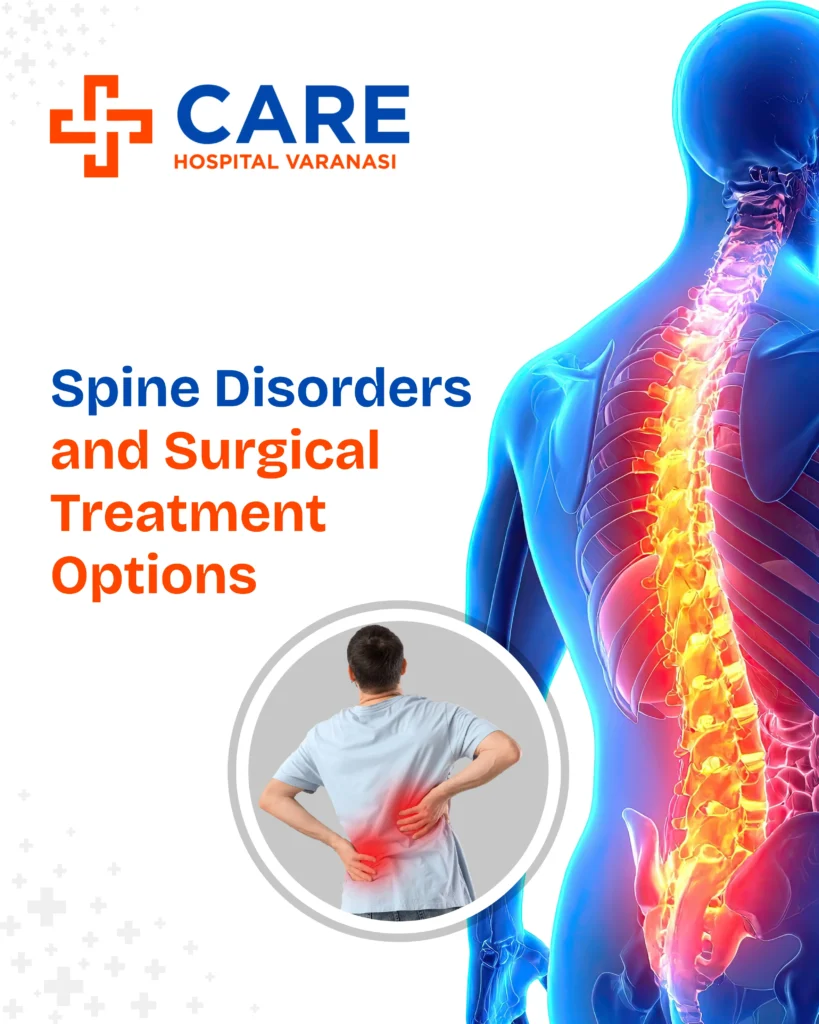
Spine disorders affect millions worldwide, causing pain, limited mobility, and reduced quality of life. From nagging lower back pain that flares up after long hours at a desk to debilitating leg weakness from nerve compression, spinal issues can disrupt daily routines, work, and sleep. In India, where sedentary lifestyles, heavy lifting, poor posture, and age-related changes are common, spine problems are increasingly prevalent.
The spine, or backbone, consists of 33 vertebrae stacked with intervertebral discs, ligaments, muscles, and the spinal cord running through the center. It supports the body, protects nerves, and enables movement. When something goes wrong—whether from injury, degeneration, or disease—symptoms like pain, numbness, tingling, or weakness can appear.
Fortunately, most spine disorders respond well to conservative treatments, but when they don’t, surgical options offer effective relief. Early intervention often prevents progression.
In Varanasi, residents now have access to advanced care at Care Hospital Varanasi, widely regarded as the best hospital in Varanasi. Our specialized Neuro And Spinal Surgery Hospital In Varanasi provides comprehensive diagnosis and treatment for a wide range of spine conditions, led by experts like Dr. Avanish Rai, a senior neurosurgeon with over 20 years of experience in complex brain and spinal disorders. This guide covers common spine disorders, their causes, symptoms, non-surgical approaches, and surgical options—equipping you with useful information to make informed health decisions.
Common Spine Disorders: What You Need to Know
Spine issues fall into categories like degenerative, traumatic, congenital, inflammatory, or neoplastic. Here are the most frequent ones people encounter.
1. Herniated Disc (Slipped or Ruptured Disc)
The soft inner gel of a spinal disc pushes through a tear in the tough outer layer, irritating nearby nerves.
- Causes: Age-related wear, sudden twisting/lifting, trauma, or repetitive strain.
- Symptoms: Sharp back/neck pain radiating to arms/legs (sciatica if lumbar), numbness, tingling, muscle weakness. Severe cases cause bowel/bladder issues (emergency).
- Common locations: Lumbar (lower back) or cervical (neck).
Herniated discs affect up to 2% of people annually, often in 30–50 age group.
2. Degenerative Disc Disease (DDD)
Discs lose hydration and height over time, leading to reduced cushioning and instability.
- Causes: Aging, genetics, smoking, obesity, repetitive stress.
- Symptoms: Chronic aching in back/neck, worse with activity/sitting, stiffness, radiating pain if nerves involved.
- Progression: Often leads to other issues like herniation or stenosis.
DDD is a natural aging process but accelerates with lifestyle factors.
3. Spinal Stenosis
Narrowing of the spinal canal or nerve root exits compresses the cord/nerves.
- Causes: Osteoarthritis, thickened ligaments, bone spurs, disc degeneration, or congenital narrowing.
- Symptoms: Leg pain/cramping when walking (neurogenic claudication), relieved by sitting/leaning forward; numbness, weakness; balance issues in cervical cases.
- Types: Lumbar (most common) or cervical.
Prevalent in those over 60, affecting daily walking distance.
4. Spondylolisthesis
One vertebra slips forward over the one below, often due to a stress fracture (isthmic) or degeneration.
- Causes: Trauma, congenital defects, arthritis, heavy lifting.
- Symptoms: Lower back pain, leg pain, tightness in hamstrings, posture changes.
- Grades: 1–4 based on slippage severity.
Common in athletes or older adults.
5. Scoliosis and Kyphosis
Abnormal spinal curvatures—side-to-side (scoliosis) or excessive forward bend (kyphosis).
- Causes: Idiopathic (adolescent), degenerative, neuromuscular, or congenital.
- Symptoms: Uneven shoulders/hips, back pain, breathing issues in severe cases.
- When concerning: Curves >40–50 degrees often need intervention.
6. Other Conditions
- Osteoarthritis/Spondylosis: Facet joint wear causing stiffness/pain.
- Sciatica: Nerve root compression (often from disc/herniation).
- Osteoporotic compression fractures: Weak bones collapse, common in elderly.
- Infections/Tumors: Rare but serious (e.g., discitis, spinal tumors).
When to Seek Medical Help for Spine Issues
Don’t ignore persistent symptoms. See a specialist if:
- Pain lasts >4–6 weeks despite rest/meds.
- Radiating pain, numbness, or weakness in limbs.
- Pain worsens at night or with rest.
- Loss of bowel/bladder control (cauda equina syndrome—emergency).
- Unexplained weight loss, fever (infection/tumor red flags).
- Trauma with severe pain.
Early evaluation with X-rays, MRI, CT, or EMG prevents complications.
At Care Hospital Varanasi’s Neuro And Spinal Surgery Hospital In Varanasi, comprehensive assessments include advanced imaging and neurological exams for precise diagnosis.
Non-Surgical Treatment Options: The First Line
Most spine disorders (80–90%) improve without surgery.
- Medications: NSAIDs, muscle relaxants, neuropathic pain meds (gabapentin), short-term opioids.
- Physical therapy: Core strengthening, posture correction, stretching, McKenzie exercises.
- Lifestyle modifications: Weight loss, ergonomic adjustments, quitting smoking (impairs healing).
- Injections: Epidural steroids for inflammation; facet joint or nerve blocks.
- Alternative therapies: Acupuncture, chiropractic (cautiously), yoga/Pilates for flexibility.
- Bracing: Temporary support in instability cases.
Conservative management often succeeds within 6–12 weeks.
Surgical Treatment Options: When and What
Surgery is considered when conservative treatments fail (3–6 months), symptoms progress, or neurological deficits worsen. Modern techniques prioritize minimally invasive approaches for faster recovery.
1. Microdiscectomy / Endoscopic Discectomy
Removes herniated disc portion compressing nerves.
- Indications: Persistent sciatica/radiculopathy unresponsive to conservative care.
- Approach: Minimally invasive (small incision, microscope/endoscope).
- Success rates: 85–95% for leg pain relief; quick return to activity.
- Recovery: Outpatient or 1-day stay; walking same day.
2. Laminectomy / Decompression Surgery
Removes bone/ligaments to widen canal, relieving stenosis.
- Indications: Spinal stenosis with claudication or weakness.
- Minimally invasive variants: Tubular retractors reduce muscle damage.
- Success rates: 70–90% significant symptom improvement; leg pain relief high.
- Recovery: 4–6 weeks for full activity.
3. Spinal Fusion
Joins vertebrae for stability using bone grafts, screws/rods.
- Indications: Spondylolisthesis, instability, severe DDD, post-decompression.
- Types: PLIF/TLIF (posterior), ALIF (anterior), minimally invasive.
- Success rates: Fusion rates >90%; pain relief 70–85%.
- Advancements: Robotic navigation, 3D-printed implants.
4. Disc Replacement (Arthroplasty)
Replaces damaged disc with artificial one preserving motion.
- Indications: Single-level DDD without instability.
- Benefits: Reduces adjacent segment stress vs. fusion.
- Success rates: Comparable to fusion; better motion preservation.
5. Minimally Invasive Spine Surgery (MISS)
Uses small incisions, tubular retractors, endoscopy, or robotics.
- Advantages: Less blood loss, reduced pain, shorter hospital stays (1–3 days), faster rehab.
- Success rates: 80–95% pain relief/functional improvement; fusion rates >90%.
- Common procedures: MISS decompression, fusion, discectomy.
6. Other Advanced Options
- Vertebroplasty/Kyphoplasty: For osteoporotic fractures—injects cement to stabilize.
- Spinal tumor resection: For benign/malignant growths.
- Revision surgery: For failed prior procedures.
Recovery and Rehabilitation After Spine Surgery
- Immediate post-op: Pain control, early mobilization.
- Physical therapy: Starts soon; focuses on strength, flexibility, posture.
- Timeline: Return to light work 2–6 weeks (MISS); full recovery 3–12 months.
- Tips: Follow restrictions, maintain weight, avoid heavy lifting initially.
Complications (infection, non-union) are low (<5%) with experienced teams.
Prevention Strategies for Spine Health
- Maintain healthy weight and core strength.
- Practice good posture and ergonomics.
- Lift properly (bend knees, keep load close).
- Stay active with low-impact exercises.
- Avoid smoking; manage osteoporosis.
- Regular check-ups for early detection.
Why Choose Care Hospital Varanasi for Spine Care?
As the best hospital in Varanasi, Care Hospital excels in multispecialty care, including our dedicated Neuro And Spinal Surgery Hospital In Varanasi. Under Dr. Avanish Rai and team, we offer cutting-edge minimally invasive techniques, robotic assistance where applicable, and holistic support—from diagnosis to rehab. Our focus on patient outcomes, ethical practices, and advanced facilities ensures trustworthy care for spine disorders.
Spine issues don’t have to control your life. This guide is informational—consult a specialist for personalized advice.
If you’re experiencing spine-related symptoms, reach out to Care Hospital Varanasi today for expert evaluation and treatment options.