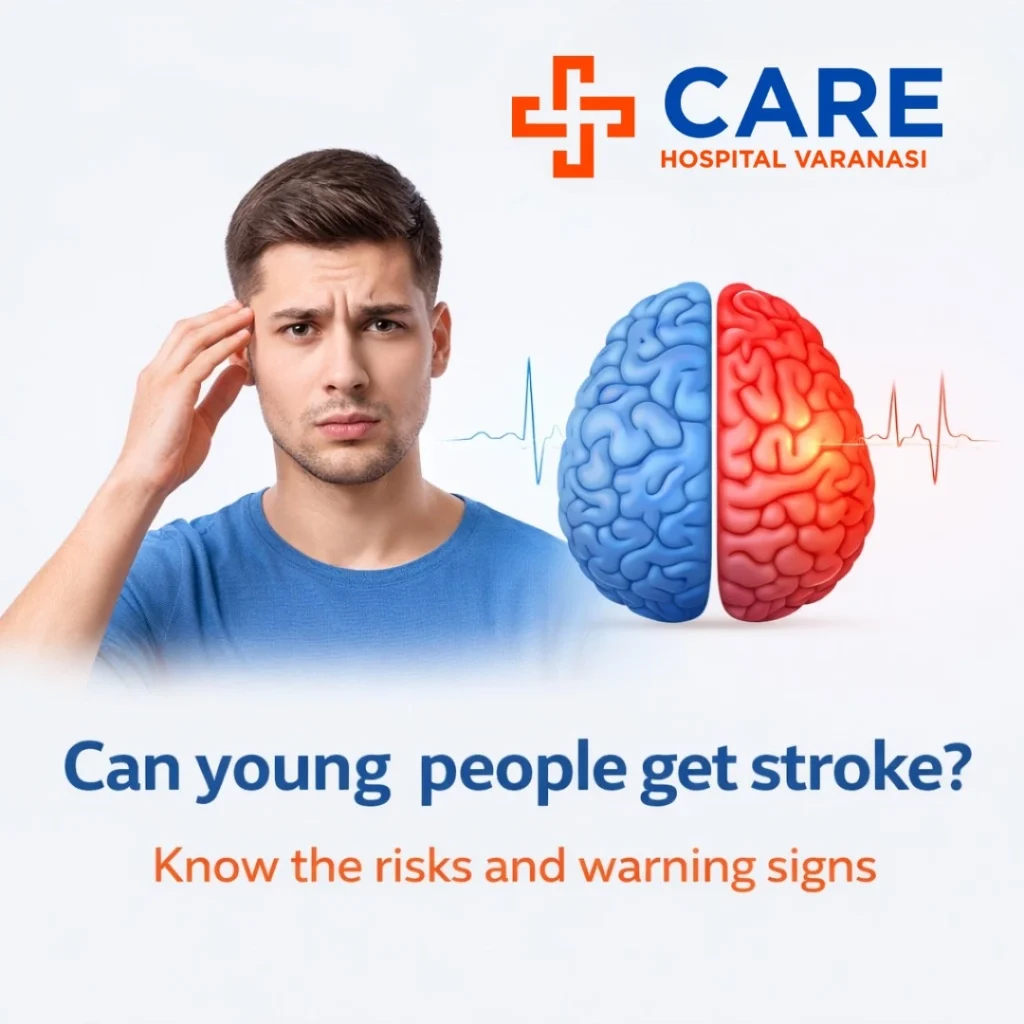
Strokes are often thought of as something that only affects the elderly, but the reality is far more alarming: young people can and do experience strokes. In fact, according to the World Health Organization, strokes among individuals under 45 have been on the rise globally, with India seeing a notable increase due to lifestyle changes and urbanization. If you’re a young adult in Varanasi, juggling work, studies, or family life amid the city’s bustling streets and humid climate, this might come as a surprise. But awareness is your first line of defense. At Care Hospital in Varanasi, we’ve treated numerous young patients who never imagined they’d face a stroke, highlighting the need for education on this topic.
In this in-depth article, we’ll explore the question, “Can young people get stroke?” We’ll delve into the risks specific to younger demographics, the subtle yet critical warning signs, and practical steps for prevention. Whether you’re in your 20s, 30s, or early 40s, understanding stroke risks in young adults can save lives. We’ll also discuss how early intervention at specialized facilities like ours can make all the difference. Let’s break down the myths, facts, and actionable advice to keep you informed and proactive.
Understanding Stroke: What It Is and Why It Matters for the Young
A stroke occurs when blood flow to the brain is interrupted, either by a clot (ischemic stroke) or a burst vessel (hemorrhagic stroke). This deprives brain cells of oxygen, leading to damage that can affect movement, speech, vision, or cognition. While age is a risk factor, strokes aren’t exclusive to seniors. The question “can young people get stroke” is increasingly relevant as data from the Indian Council of Medical Research shows a 25-30% rise in stroke cases among those under 50 in urban areas like Varanasi.
Why the uptick in young strokes? Modern lifestyles play a huge role. Sedentary jobs, high-stress environments, junk food diets, and irregular sleep patterns are common among Varanasi’s youth, from students at Banaras Hindu University to professionals in the tech sector. Add to that environmental factors like air pollution along the Ganges, which can contribute to vascular issues. Globally, the American Stroke Association reports that 10-15% of all strokes hit people aged 18-50, and in India, this figure is climbing due to undiagnosed conditions like hypertension and diabetes.
At Care Hospital in Varanasi, our neurology experts emphasize that young strokes often stem from preventable causes. Unlike older adults, where atherosclerosis (plaque buildup) is common, younger cases might involve heart defects, blood clotting disorders, or even recreational drug use. For instance, a 28-year-old patient we treated recently had a stroke triggered by untreated high blood pressure from chronic stress. This underscores that no one is immune—knowledge of stroke risks in young adults is essential for early detection.
Busting the Myth: Why Young People Are Not Immune to Strokes
One of the biggest misconceptions is that strokes are an “old person’s disease.” This myth leads many young people to ignore symptoms, delaying treatment and worsening outcomes. But can young people get stroke? Absolutely yes. Studies from the Journal of the American Heart Association indicate that stroke incidence in young adults has increased by 40% over the past two decades, driven by obesity, smoking, and metabolic syndromes.
In Varanasi, where traditional diets mix with fast food temptations, young people face unique challenges. A local survey by the Uttar Pradesh Health Department revealed that 20% of adults under 35 have pre-hypertension, a silent precursor to strokes. Genetic factors also play a part; if your family has a history of cardiovascular issues, your risk amplifies, regardless of age.
Consider celebrity cases like actress Hailey Bieber, who suffered a mini-stroke at 25 due to a patent foramen ovale (a heart hole present from birth). Such stories highlight that even fit, healthy young individuals aren’t safe. In India, cricketer Prithvi Shaw’s health scares have brought attention to young athletes’ vulnerabilities. At Care Hospital, we’ve seen similar patterns: a 32-year-old IT professional with a stroke from prolonged screen time and dehydration, common in Varanasi’s hot summers.
The key takeaway? Age doesn’t protect you. Stroke risks in young adults include autoimmune diseases like lupus, migraines with aura (especially in women), and hormonal factors from birth control pills. Pregnancy-related strokes are another concern for young women, with preeclampsia doubling the risk. If you’re asking “can young people get stroke,” the answer is a resounding yes—vigilance is crucial.
Key Risk Factors for Strokes in Young Adults
Identifying stroke risks in young adults is the first step toward prevention. Unlike older populations, young strokes often have identifiable triggers that can be managed. Here’s a breakdown of the most common ones:
Lifestyle-Related Risks
- Smoking and Substance Abuse: Tobacco use narrows blood vessels, increasing clot formation. In Varanasi, where hookah lounges are popular among youth, this is a growing issue. Cocaine or amphetamines can cause sudden spikes in blood pressure, leading to hemorrhagic strokes.
- Poor Diet and Obesity: High-salt, high-fat diets contribute to hypertension. With Varanasi’s street food culture—think chaat and sweets—young people often exceed recommended sodium intake, raising stroke risks.
- Lack of Exercise: Sedentary lifestyles weaken the heart and promote weight gain. Aim for at least 150 minutes of moderate activity weekly, like brisk walks in Assi Ghat parks.
- Stress and Mental Health: Chronic stress releases cortisol, which can damage arteries. In high-pressure jobs or studies, this is rampant among Varanasi’s young population.
Medical Conditions
- Hypertension and Diabetes: Often undiagnosed in youth, these “silent killers” are major culprits. A study in The Lancet found that 1 in 5 Indian young adults has high blood pressure.
- Heart Problems: Conditions like atrial fibrillation or congenital defects can send clots to the brain.
- Blood Disorders: Sickle cell anemia or clotting disorders like Factor V Leiden are more common in certain ethnic groups and can trigger strokes early.
- Infections and Autoimmune Issues: COVID-19 has been linked to increased stroke risks in young survivors, as inflammation affects blood vessels.
Women face additional risks from oral contraceptives, which can increase clotting, especially if combined with smoking. Migraines, affecting 15% of young women, double the stroke odds when accompanied by visual auras.
At Care Hospital in Varanasi, we offer comprehensive screenings to identify these risks early. Our Neuro and Spinal Surgery department specializes in advanced diagnostics like Doppler ultrasounds to catch vascular issues before they escalate.
Recognizing Stroke Warning Signs: Act FAST
Knowing stroke warning signs can mean the difference between full recovery and lifelong disability. Young people often dismiss symptoms as “just a headache” or fatigue, but early recognition is vital. The American Stroke Association’s FAST acronym is a lifesaver:
- Face Drooping: Does one side of the face sag when smiling?
- Arm Weakness: Can both arms be raised equally, or does one drift down?
- Speech Difficulty: Is speech slurred or hard to understand?
- Time to Call: If any sign appears, call emergency services immediately.
Additional stroke warning signs include sudden severe headache, vision loss in one or both eyes, dizziness, or confusion. In young adults, symptoms might be subtler, like temporary numbness or a “thunderclap” headache mimicking a migraine.
A transient ischemic attack (TIA), or mini-stroke, is a major red flag. Symptoms resolve quickly, but 1 in 3 people with a TIA will have a full stroke within a year if untreated. In Varanasi, where traffic delays can hinder quick hospital access, knowing these signs is critical.
Real-life example: A 35-year-old teacher in Varanasi ignored arm weakness, attributing it to gym strain. By the time she reached Care Hospital, precious time was lost. Fortunately, our rapid response team administered clot-busting drugs, aiding her recovery.
Prevention Strategies: Lowering Stroke Risks in Young Adults
The good news? Up to 80% of strokes are preventable. For young people, lifestyle tweaks can drastically reduce risks:
- Healthy Eating: Opt for a balanced diet with fruits, veggies, and whole grains. In Varanasi, incorporate local superfoods like amla (Indian gooseberry) for antioxidants.
- Regular Exercise: Yoga, cycling, or swimming strengthens the heart. Join community classes to make it fun.
- Blood Pressure Management: Monitor at home and consult doctors for levels above 120/80.
- Quit Smoking and Limit Alcohol: Seek support groups if needed.
- Stress Reduction: Meditation or mindfulness apps help combat urban stress.
Regular check-ups are non-negotiable. At Care Hospital, our preventive packages include lipid profiles and ECGs tailored for young adults.
For those with cosmetic concerns post-stroke, such as facial asymmetry, our Plastic Surgery Hospital in Varanasi offers reconstructive options to restore confidence.
Treatment and Recovery: What Happens After a Stroke?
If a stroke occurs, time is brain—every minute without treatment kills 1.9 million neurons. At Care Hospital in Varanasi, our 24/7 stroke unit uses thrombolysis (clot-dissolving drugs) within the 4.5-hour window for optimal results.
Post-stroke care involves rehabilitation: physiotherapy for mobility, speech therapy for communication, and occupational therapy for daily tasks. Young patients often recover better due to brain plasticity.
Our integrated approach includes neurosurgical interventions if needed, like aneurysm clipping. Recovery stories from our patients inspire hope—a 29-year-old entrepreneur regained full function through our tailored program.
Emotional support is key; depression affects 1 in 3 survivors. Counseling and support groups at Care Hospital address this holistically.
Special Considerations for Young Women and Men
Gender influences stroke risks. Young women should be cautious with contraceptives and during pregnancy. Men, often smokers, face higher ischemic stroke rates.
In Varanasi’s conservative society, women might delay seeking help—empowerment through education is vital.
The Role of Technology in Stroke Prevention
Apps for BP tracking and wearables detecting irregular heartbeats are game-changers for tech-savvy youth.
Community Awareness in Varanasi
Local initiatives, like health camps by Care Hospital, educate on strokes. Join us to spread the word.
Conclusion: Empower Yourself Against Strokes
Can young people get stroke? Yes, but with knowledge of risks and warning signs, you can mitigate them. Prioritize health, recognize symptoms, and act fast. At Care Hospital in Varanasi, we’re here for prevention, treatment, and recovery. Schedule a check-up today—your future self will thank you.