The question “How many IVF cycles does it take to get pregnant?” weighs heavily on the minds of couples embarking on fertility treatment. In vitro fertilization (IVF) has brought hope to millions facing infertility, but it’s rarely a one-and-done process. Success often builds over multiple attempts, influenced by factors like age, egg quality, underlying causes of infertility, and the clinic’s expertise.
While some couples achieve pregnancy on their first cycle, many need two, three, or more. Understanding realistic expectations, cumulative success rates, and what influences outcomes can help you plan emotionally and financially. In regions like Uttar Pradesh, where access to advanced fertility care is growing, choosing a reliable center makes a big difference.
At Care Hospital Varanasi, recognized as one of the best hospitals in Varanasi, our IVF center in Varanasi provides personalized, evidence-based treatments with high success rates. Led by experienced specialists like Dr. Madhulika Rai, we focus on compassionate care and advanced technologies to maximize your chances. This comprehensive guide breaks down typical IVF cycle numbers, success statistics, influencing factors, and tips to optimize your journey.
What Is an IVF Cycle?
An IVF cycle starts with ovarian stimulation (medications to produce multiple eggs), followed by egg retrieval, lab fertilization, embryo culture, and embryo transfer. Any unused embryos can be frozen for future transfers.
A “complete cycle” often includes one egg retrieval and all resulting transfers (fresh and frozen). Success is measured by live birth rates—the ultimate goal.
Per-cycle success (live birth per transfer or retrieval) varies widely, but cumulative rates (over multiple cycles) tell a more encouraging story: persistence often pays off.
Average Number of IVF Cycles Needed
There’s no universal number, but data from large studies and registries provide clear patterns.
- Per-cycle live birth rates (using own eggs):
- Under 35: Often 40–55% per transfer.
- 35–37: Around 30–40%.
- 38–40: 20–30%.
- Over 40: 10–15% or lower.
These are averages from sources like the Society for Assisted Reproductive Technology (SART), CDC, and HFEA (UK). Individual clinics vary—some report higher rates with optimized protocols.
- Cumulative success (chance of live birth after multiple cycles):
- Many studies show 50–70% of women under 40 achieve a live birth after 3–6 cycles.
- A landmark UK study (over 156,000 women) found a cumulative live birth rate of about 65% after six cycles for all ages, with higher rates (around 68%) for those under 40.
- For younger patients, success often reaches 60–80% by three cycles in some analyses.
- Older patients (over 40) see lower cumulative rates (around 30–40% after six cycles), but donor eggs can dramatically improve odds.
On average, most couples who succeed do so within 2–3 full cycles, though planning for 3–6 is realistic for comprehensive budgeting and emotional preparation. Stopping too early (after just one or two failed attempts) is common but can mean missing out on success.
In practice, clinics often recommend evaluating after 3 cycles before major protocol changes.
Why Multiple Cycles Are Often Needed
IVF isn’t guaranteed because of biological variability:
- Egg and embryo quality: Not every egg fertilizes, develops into a blastocyst, or implants. Even chromosomally normal embryos have ~50–60% implantation chance.
- Random chance: Implantation involves complex interactions; even perfect embryos sometimes fail.
- Response to stimulation: Some cycles yield more/better eggs than others.
- Uterine factors: Endometrial receptivity varies cycle to cycle.
Frozen embryo transfers (FET) often have higher success than fresh ones due to better uterine preparation.
Factors That Influence How Many Cycles You Might Need
1. Age of the Woman
Age is the strongest predictor. Egg quantity and quality decline sharply after 35.
- Under 35: Many succeed in 1–2 cycles; cumulative rates high.
- 35–39: Often 2–4 cycles.
- 40+: May need more cycles or consider donor options.
Younger patients frequently achieve success sooner.
2. Cause of Infertility
- PCOS or ovulatory issues: Good response to stimulation, often fewer cycles.
- Endometriosis or tubal factors: May require surgery first or more attempts.
- Male factor: ICSI helps, but sperm quality matters.
- Unexplained: Similar to average rates.
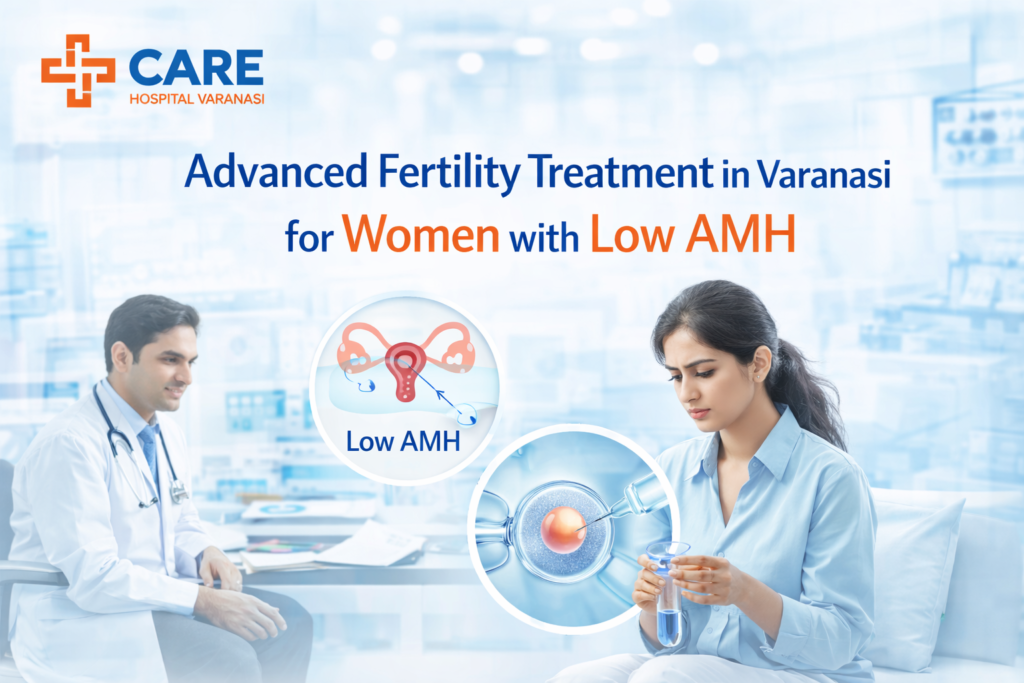
- Diminished ovarian reserve (low AMH/poor response): Often need multiple retrievals to bank embryos.
3. Lifestyle and Health
- BMI in healthy range (18.5–24.9): Better outcomes.
- No smoking, limited alcohol, balanced diet: Improves egg quality.
- Managing stress, thyroid, or diabetes: Optimizes response.
4. Clinic and Protocol Quality
Experienced labs, embryologists, and personalized protocols boost rates. Advanced techniques like ICSI, time-lapse imaging, or preimplantation genetic testing (PGT) can reduce cycles needed by selecting better embryos.
At our IVF center in Varanasi, we tailor protocols, achieving competitive rates (e.g., 50–60% for under 35, per our center data).
5. Use of Donor Eggs or Embryos
For women over 40 or with poor reserve, donor eggs yield 50–60%+ per transfer, often succeeding in 1–2 cycles.
What Success Rates Look Like at Care Hospital Varanasi
As a leading IVF center in Varanasi, Care Hospital offers transparent, high-quality care. Our success rates align with national/international benchmarks, adjusted for patient profiles:
- Under 35: 50–60% per cycle.
- 35–40: 30–40%.
- Over 40: 10–20% (higher with donors).
We emphasize cumulative planning, emotional support, and ethical practices. As part of the best hospital in Varanasi, we integrate multispecialty care (e.g., endocrinology for PCOS/thyroid issues during treatment).
Emotional and Financial Considerations for Multiple Cycles
IVF can be taxing:
- Emotional toll: Failed cycles cause grief; counseling helps.
- Financial planning: Costs add up—budget for 3+ cycles if possible. Some use insurance, financing, or shared-risk programs.
- Breaks between cycles: Rest periods improve outcomes.
Support groups, mindfulness, and open communication with your partner are vital.
Tips to Maximize Chances and Potentially Reduce Cycles Needed
- Choose the right clinic early — Research success rates, lab standards.
- Optimize health pre-treatment — Quit smoking, achieve healthy weight, take prenatals/CoQ10 (under guidance).
- Follow protocols precisely — Attend all monitoring.
- Consider FET over fresh — Often higher success.
- Use PGT if appropriate — Screens for chromosomally normal embryos.
- Bank embryos if possible — Multiple retrievals for better selection.
- Stay informed — Use tools like SART/CDC estimators for personalized odds.
When to Reassess or Explore Alternatives
After 3 unsuccessful cycles, many reevaluate:
- Protocol changes.
- Additional testing (e.g., ERA for receptivity).
- Donor options or adoption.
Don’t hesitate to seek second opinions.
Final Thoughts: Hope and Realistic Planning
IVF success often requires persistence—many achieve pregnancy after 2–4 cycles, with cumulative rates exceeding 60–70% for younger patients after more attempts. Age matters most, but modern techniques and expert care improve odds significantly.
In Varanasi, Care Hospital Varanasi stands out as the best hospital in Varanasi for fertility journeys. Our IVF center in Varanasi combines advanced tech, experienced specialists, and holistic support to guide you every step.
This information is general—consult a fertility expert for your case. Reach out to our team today for a consultation. Your path to parenthood may take time, but with the right support, it’s achievable.