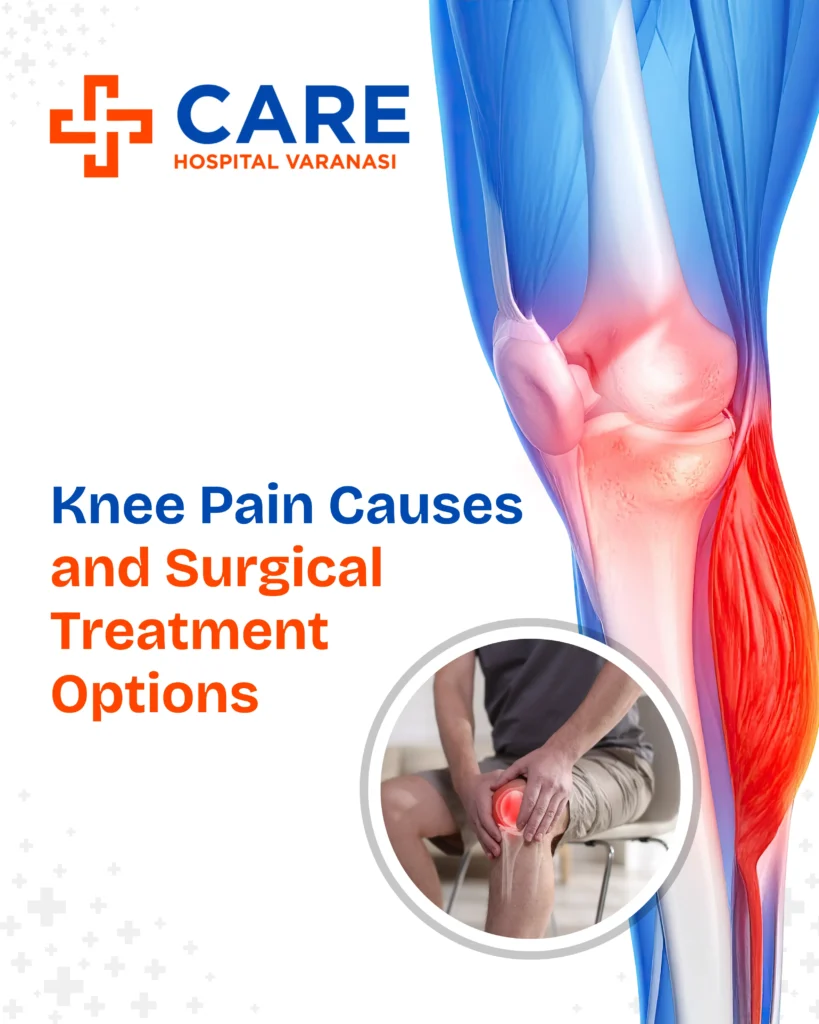
Knee pain is one of the most common complaints people bring to doctors, affecting people of all ages—from young athletes to seniors dealing with daily activities. Whether it’s a sharp twinge during a walk, stiffness after sitting, or constant aching that disrupts sleep, knee pain can significantly impact quality of life. In many cases, it’s temporary and improves with rest and home care, but persistent or severe pain often signals an underlying issue that may require professional evaluation and, in some cases, surgical intervention.
Understanding the causes of knee pain and knowing when surgery might be necessary empowers you to seek timely help. In Varanasi and surrounding areas like Prayagraj, access to advanced orthopedic care makes a big difference in outcomes. At Care Hospital Varanasi, recognized as one of the best hospitals in Varanasi, our Orthopedic Surgery in Varanasi department, led by experts like Dr. Chandan Kishore (MBBS, MS Orthopedics), offers comprehensive diagnosis, non-surgical management, and state-of-the-art surgical solutions for knee conditions. This detailed guide explores common causes of knee pain, when to worry, non-surgical options, and surgical treatments—providing practical, evidence-based information to help you navigate your symptoms.
What Makes the Knee So Prone to Pain?
The knee is the body’s largest joint, a complex hinge connecting the thighbone (femur), shinbone (tibia), and kneecap (patella). It includes cartilage (for smooth gliding), menisci (shock absorbers), ligaments (for stability), tendons (connecting muscles), and a synovial lining (for lubrication). This structure supports your full body weight during movement, making it vulnerable to wear, injury, and inflammation.
Pain can originate from any component—soft tissues, bones, or the joint itself—and often worsens with activity, weather changes, or prolonged rest.
Common Causes of Knee Pain
Knee pain stems from injuries, overuse, degenerative changes, or systemic conditions. Here’s a breakdown of the most frequent culprits.
1. Osteoarthritis (The Leading Cause in Adults)
Osteoarthritis (OA) is the most prevalent reason for chronic knee pain, especially in people over 50. It occurs when protective cartilage wears down over time, leading to bone-on-bone contact, inflammation, bone spurs, and stiffness.
- Risk factors: Age, obesity (extra weight stresses the joint), previous injuries, genetics, and repetitive high-impact activities.
- Symptoms: Gradual onset of aching pain, swelling after activity, morning stiffness (lasting <30 minutes), grinding sensation, and reduced range of motion.
- Prevalence: Globally, over 365 million people live with knee OA, and it’s the top cause of disability in older adults.
In Varanasi, where many lead active lifestyles or have physically demanding jobs, early OA management is key.
2. Injuries and Trauma
Acute injuries often cause sudden, severe pain.
- Meniscus tears: The C-shaped cartilage cushions the joint. Tears happen from twisting (common in sports) or degeneration with age. Symptoms include locking, catching, swelling, and pain on the inner/outer knee.
- Ligament sprains/tears: ACL (anterior cruciate ligament) tears from sudden stops/pivots (sports like football/cricket); MCL/LCL from side impacts; PCL from falls.
- Fractures: Patella or tibial plateau breaks from falls or accidents.
- Patellar dislocation: Kneecap slips out of place, often in younger people.
Post-traumatic arthritis can develop years after an untreated or poorly healed injury.
3. Overuse and Repetitive Strain
Common in runners, cyclists, or those with jobs involving kneeling/squatting.
- Patellofemoral pain syndrome (runner’s knee): Pain around/under the kneecap from misalignment or weak hip/quad muscles.
- Tendinitis (e.g., patellar or quadriceps): Inflammation of tendons from overuse.
- Bursitis: Inflamed fluid sacs (bursae) from repeated pressure (housemaid’s knee).
4. Other Medical Conditions
- Rheumatoid arthritis: Autoimmune inflammation causing swelling, warmth, and symmetric joint involvement.
- Gout: Uric acid crystals cause sudden, intense pain (often with redness/swelling).
- Infections or septic arthritis: Rare but serious, with fever and severe swelling.
- Avascular necrosis: Bone death from poor blood supply, leading to collapse.
Obesity, poor biomechanics, or muscle imbalances exacerbate many causes.
When Should You See a Doctor for Knee Pain?
Most minor pain improves with rest, but seek prompt care if:
- Pain follows injury with swelling, instability, or inability to bear weight.
- Knee locks, gives way, or buckles.
- Pain persists >6 weeks despite rest/OTC meds.
- Swelling doesn’t subside, or you have fever/redness (infection risk).
- Night pain or pain at rest.
- Limited motion affecting daily life (walking, stairs, sitting).
Early diagnosis via exam, X-rays, MRI, or ultrasound prevents worsening.
At Care Hospital Varanasi’s Orthopedic Surgery in Varanasi department, specialists use advanced imaging and assessments for accurate diagnosis.
Non-Surgical Treatment Options First
Surgery is rarely the first step. Most cases start conservatively:
- RICE protocol: Rest, Ice (20 min sessions), Compression, Elevation.
- Medications: NSAIDs (ibuprofen) for pain/inflammation; acetaminophen for pain; topical creams.
- Physical therapy: Strengthening quads/hamstrings/hips, stretching, balance exercises.
- Weight management: Losing 10% body weight reduces knee stress significantly.
- Injections: Corticosteroids for inflammation; hyaluronic acid (viscosupplementation) for lubrication in OA; PRP (platelet-rich plasma) for healing.
- Bracing/orthotics: Support alignment or unload compartments.
- Lifestyle changes: Low-impact activities (swimming, cycling), proper footwear.
Many improve without surgery—especially early intervention.
When Is Surgical Treatment Necessary?
Surgery is considered when conservative measures fail (3–6 months), pain severely limits function, or structural damage requires repair.
Common surgical options:
1. Arthroscopic Knee Surgery (Minimally Invasive)
A small camera (arthroscope) and tools through tiny incisions diagnose and treat issues.
- Indications: Meniscus tears (trim/repair), loose bodies removal, cartilage debridement, ligament reconstruction (e.g., ACL), synovial inflammation.
- Benefits: Outpatient, minimal scarring, quick recovery.
- Recovery: Crutches 1–7 days; full activity 4–12 weeks (simple procedures faster; ACL longer).
- Success: High for targeted issues—e.g., 80–90% satisfaction for meniscus repair in suitable patients.
Ideal for younger/active people or when OA isn’t advanced.
2. Total Knee Replacement (Arthroplasty)
Replaces damaged joint surfaces with metal/plastic implants.
- Indications: Advanced OA, rheumatoid arthritis, post-traumatic damage when pain/deformity severely limits life.
- Types: Cemented (standard), cementless (bone ingrowth, younger patients), robotic-assisted (precision alignment).
- Success rates: Over 90–95% at 10 years; 80–90% at 15–20 years. 85–95% patients report significant pain relief and improved function.
- Procedure: 1–2 hour surgery; hospital stay 3–5 days.
- Recovery: Walking day 1 with walker; PT intensive; driving 4–6 weeks; full recovery 3–6 months.
- Advancements: Minimally invasive, patient-specific implants, robotic guidance for better alignment/outcomes.
Partial knee replacement (unicompartmental) for isolated damage—smaller incision, faster recovery, 90–95% survival at 10–15 years.
3. Other Procedures
- Osteotomy: Realigns bones for uneven wear (younger patients).
- Cartilage restoration: Microfracture, ACI for focal defects.
Recovery and Rehabilitation After Knee Surgery
Success depends on post-op care:
- Pain management: Meds, ice, elevation.
- PT: Crucial—starts day 1, focuses on range, strength, gait.
- Home tips: Avoid high-impact initially; use assistive devices.
- Complications (rare): Infection (<1%), blood clots, stiffness—minimized with protocols.
Most return to daily activities pain-free.
Prevention Tips for Knee Health
- Maintain healthy weight.
- Strengthen legs/hips/core.
- Warm up before activity.
- Use proper technique in sports/work.
- Wear supportive shoes.
- Address minor issues early.
Why Choose Care Hospital Varanasi for Knee Care?
As the best hospital in Varanasi, Care Hospital provides integrated orthopedic services. Our Orthopedic Surgery in Varanasi team, including Dr. Chandan Kishore, specializes in joint replacements, arthroscopy, trauma, and sports injuries using modern techniques for optimal results. With multispecialty support (physiotherapy, pain management), we ensure holistic care.
Knee pain doesn’t have to limit you. Consult a specialist for personalized advice—this guide is informational only.
If knee pain affects your life, contact Care Hospital Varanasi today for expert evaluation and treatment.