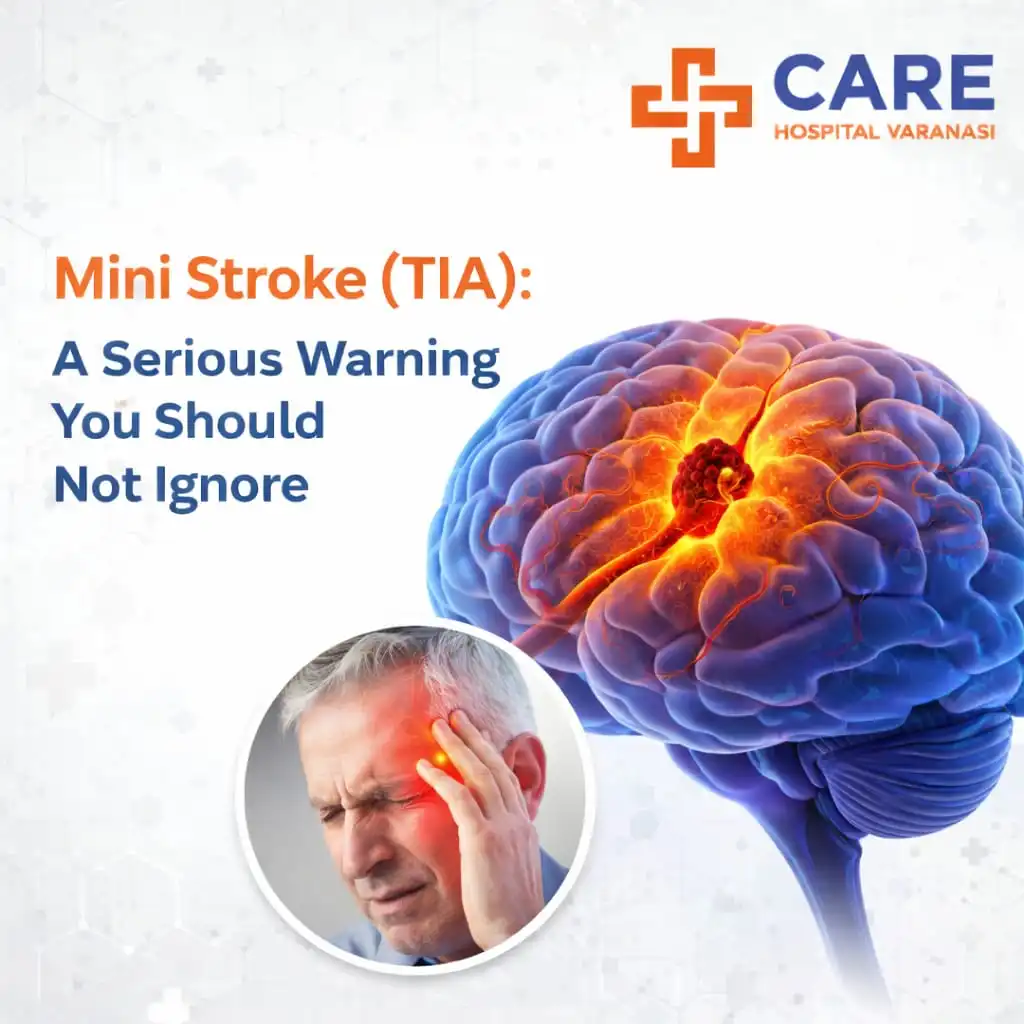
A mini stroke, medically known as a Transient Ischemic Attack (TIA), is often called a “warning stroke” for good reason. It strikes suddenly, mimics full stroke symptoms, but resolves quickly—usually within minutes to hours—leaving no permanent damage. Yet, dismissing it as “just a funny turn” is dangerous. A TIA is one of the clearest signals that a major stroke could be imminent, sometimes within days.
Every year, around 240,000 people in the United States experience a TIA, and the risk of a full stroke in the following 90 days can reach up to 17-18%, with nearly half occurring in the first 48 hours. Globally, similar patterns hold, making TIA a critical red flag. Ignoring it dramatically increases the chance of disability, loss of independence, or even death.
In this detailed guide, we’ll explore what a TIA really is, why it happens inside the brain, common symptoms, key differences from a full stroke, major risk factors, diagnosis, immediate and long-term prevention strategies, treatment options, and lifestyle changes that can slash your risk. If you’re in Varanasi or nearby and worried about neurological symptoms or family history of stroke, prompt evaluation at a trusted facility can be life-saving.
What Exactly Is a Mini Stroke (TIA)?
A Transient Ischemic Attack occurs when blood flow to a part of the brain is temporarily blocked, usually by a small clot or narrowed artery. Unlike a full ischemic stroke, the blockage clears quickly—often on its own—restoring oxygen and nutrients before brain cells die permanently.
Modern definitions (from the American Heart Association/American Stroke Association) are tissue-based rather than purely time-based: a TIA is brief neurological dysfunction due to focal brain or retinal ischemia, without evidence of acute infarction on imaging like MRI. Symptoms typically last less than an hour, though they can persist up to 24 hours in rare cases.
Think of it as a brief power outage in the brain’s electrical grid. The lights flicker, appliances stutter, but power returns before anything fries. However, the wiring issue remains, and the next outage could be catastrophic.
TIAs affect people of all ages but become far more common after 55, with risk doubling every decade. Men face slightly higher odds, though women often experience them later in life.
What Happens in the Brain During a TIA?
The brain demands constant oxygen and glucose—about 20% of the body’s supply despite being only 2% of body weight. During a TIA, an artery supplying a brain region narrows or gets briefly blocked.
Common mechanisms include:
- Embolism: A tiny clot (embolus) travels from the heart (e.g., due to atrial fibrillation) or carotid artery plaque and lodges temporarily in a brain vessel.
- Thrombosis: Local clot formation in a narrowed cerebral artery from atherosclerosis.
- Small vessel disease: Blockage in tiny penetrating arteries, often linked to chronic high blood pressure.
Blood flow drops sharply in the affected area. Neurons deprived of oxygen switch to inefficient anaerobic metabolism, producing lactic acid and disrupting electrical signals. This causes sudden symptoms like weakness or speech issues.
Within minutes to an hour, the clot dissolves, blood flow resumes, and neurons recover fully—no permanent infarct forms (unlike stroke, where cells die after ~4-6 minutes of severe ischemia).
However, the event leaves the brain vulnerable. Inflammation, endothelial damage, and unstable plaques persist, priming the system for a worse blockage soon after.
Recognizing the Symptoms: FAST Isn’t Just for Full Strokes
TIA symptoms mirror those of ischemic stroke but resolve completely. Use the FAST acronym every time:
- Face drooping: One side of the face numb or drooping. Ask the person to smile—does it look uneven?
- Arm weakness: Sudden weakness or numbness in one arm. Ask them to raise both arms—does one drift downward?
- Speech difficulty: Slurred speech, trouble speaking, or confusion understanding others.
- Time to call emergency: Even if symptoms vanish in minutes, seek help immediately.
Other common signs include:
- Sudden blurred or lost vision in one or both eyes (amaurosis fugax).
- Dizziness, loss of balance, or coordination problems.
- Sudden severe confusion or trouble understanding.
- Numbness or tingling on one side of the body.
Symptoms depend on the brain area affected—e.g., middle cerebral artery territory often causes face/arm weakness and speech issues, while posterior circulation TIAs may cause vertigo or double vision.
Because symptoms fade, many people downplay them. But medical experts stress: treat every TIA as an emergency. Up to 30-50% of people later found to have had a “mini stroke” actually show small infarcts on advanced imaging, meaning it was a minor stroke.
TIA vs. Full Stroke: Key Differences and Why It Matters
| Aspect | TIA (Mini Stroke) | Full Ischemic Stroke |
|---|---|---|
| Duration | Minutes to <24 hours (usually <1 hour) | Symptoms persist >24 hours or cause death |
| Brain Damage | No permanent infarction (by definition) | Permanent cell death and tissue loss |
| Recovery | Full resolution of symptoms | Often long-term disability or deficits |
| Imaging | No acute changes on DWI-MRI | Infarct visible on MRI/CT |
| Immediate Risk | High short-term stroke risk (up to 17% in 90 days) | Already occurred; focus on rehab |
| Urgency | Emergency—prevent next event | Emergency—limit damage |
The biggest danger? A TIA is often the prelude. Studies show 10-20% of TIA patients have a stroke within 90 days, half within 48 hours. Prompt intervention can cut this risk by up to 80% through aggressive prevention.
Major Risk Factors: Who’s Most Vulnerable?
TIAs share the same risks as strokes. Controllable factors include:
- High blood pressure (hypertension): The #1 modifiable cause—damages arteries over time.
- Smoking: Doubles risk by promoting clots and vessel damage.
- Diabetes: Accelerates atherosclerosis and clotting.
- High cholesterol: Leads to plaque buildup in carotid and cerebral arteries.
- Atrial fibrillation (AFib): Irregular heartbeat causes clots to form in the heart.
- Obesity, inactivity, poor diet: Contribute to metabolic syndrome.
- Excessive alcohol: Raises blood pressure and promotes irregular rhythms.
Non-modifiable risks: Age >55, family history of stroke/TIA, prior stroke/TIA, male sex (slightly higher), certain ethnic backgrounds (higher in South Asian populations due to diabetes/hypertension prevalence).
Diagnosis: Don’t Wait—Get Checked Immediately
Even if symptoms disappear, head to the emergency department or a stroke center. Doctors use:
- Physical/neurological exam.
- Brain imaging: CT to rule out bleed; MRI (preferred) with diffusion-weighted imaging to detect tiny infarcts.
- Vascular imaging: Carotid ultrasound, CT/MR angiography for stenosis.
- Heart tests: ECG, Holter monitor for AFib; echocardiogram.
- Blood tests: Cholesterol, sugar, clotting factors.
Tools like the ABCD² score (Age, Blood pressure, Clinical features, Duration, Diabetes) help estimate short-term stroke risk.
Prevention and Treatment: Turning the Warning into Protection
The good news? TIA is highly preventable. Guidelines from AHA/ASA and Mayo Clinic emphasize rapid, comprehensive management:
- Antiplatelet therapy: Aspirin or clopidogrel (often dual for first weeks) to prevent clots.
- Anticoagulants: For AFib-related TIAs (warfarin or DOACs like apixaban).
- Blood pressure control: Target <130/80 mmHg with meds and lifestyle.
- Statins: High-intensity for cholesterol reduction.
- Carotid procedures: Endarterectomy or stenting if significant narrowing (>50-70%).
- Lifestyle overhaul:
- Quit smoking.
- Mediterranean-style diet: fruits, veggies, whole grains, fish, olive oil.
- Exercise: 150 minutes moderate activity/week.
- Weight management.
- Limit alcohol.
- Manage diabetes tightly.
These steps can reduce recurrent stroke risk by 80% or more.
Living After a TIA: Recovery and Long-Term Outlook
Most people recover fully from the episode itself, but emotional impact is real—anxiety, fear of recurrence, or mild cognitive changes. Follow-up with a neurologist is essential.
Rehabilitation focuses on risk control rather than deficit recovery. Many resume normal life quickly, but vigilance remains key.
If you’re in Varanasi and have experienced TIA-like symptoms, chest pain during pregnancy, or other concerns, specialized care matters. For women facing pregnancy-related risks or gynecological issues that intersect with vascular health (like preeclampsia increasing future stroke risk), the Obstetrics and Gynecology hospital in Varanasi offers expert support. For comprehensive evaluation, emergency stroke care, or multidisciplinary management, turn to the best hospital in Varanasi—equipped with advanced imaging, neurology teams, and preventive programs.
Final Thoughts: Act on the Warning Today
A mini stroke (TIA) isn’t “mini” in importance—it’s a loud alarm bell. By recognizing symptoms, seeking urgent care, and committing to prevention, you can rewrite the story and avoid a devastating stroke.
Don’t wait for the next episode. Listen to your body, control what you can, and consult professionals promptly. Your future health depends on not ignoring this serious warning.