A stroke is a medical emergency that requires immediate attention and expert care. It can occur suddenly and may have life-changing consequences if not treated on time. At CARE Hospital Varanasi, we believe that awareness is the first step toward prevention and recovery. Understanding what a stroke is and learning to recognize its early warning signs through the BEFAST method can help save lives and reduce long-term complications.
Understanding Stroke
A stroke occurs when the blood supply to a part of the brain is disrupted, depriving brain cells of oxygen and essential nutrients. Since the brain controls vital functions such as movement, speech, memory, and coordination, any interruption in blood flow can lead to serious damage. Brain cells begin to die within minutes, which is why rapid diagnosis and treatment are crucial.
There are mainly two types of stroke. Ischemic stroke, the most common form, happens when a blood clot blocks a blood vessel supplying the brain. Hemorrhagic stroke occurs when a blood vessel ruptures, causing bleeding in or around the brain. Another important condition is a Transient Ischemic Attack (TIA), often called a mini-stroke. Although its symptoms may resolve quickly, a TIA is a strong warning sign and should never be ignored.
Why Early Stroke Care Matters
Stroke is one of the leading causes of death and long-term disability. Delayed treatment can result in paralysis, speech difficulties, memory loss, and reduced quality of life. However, with early medical intervention and advanced neurological care, many of these effects can be minimized. Reaching a well-equipped hospital like CARE Hospital Varanasi at the earliest sign of stroke can make a significant difference in recovery outcomes.
What Is BEFAST?
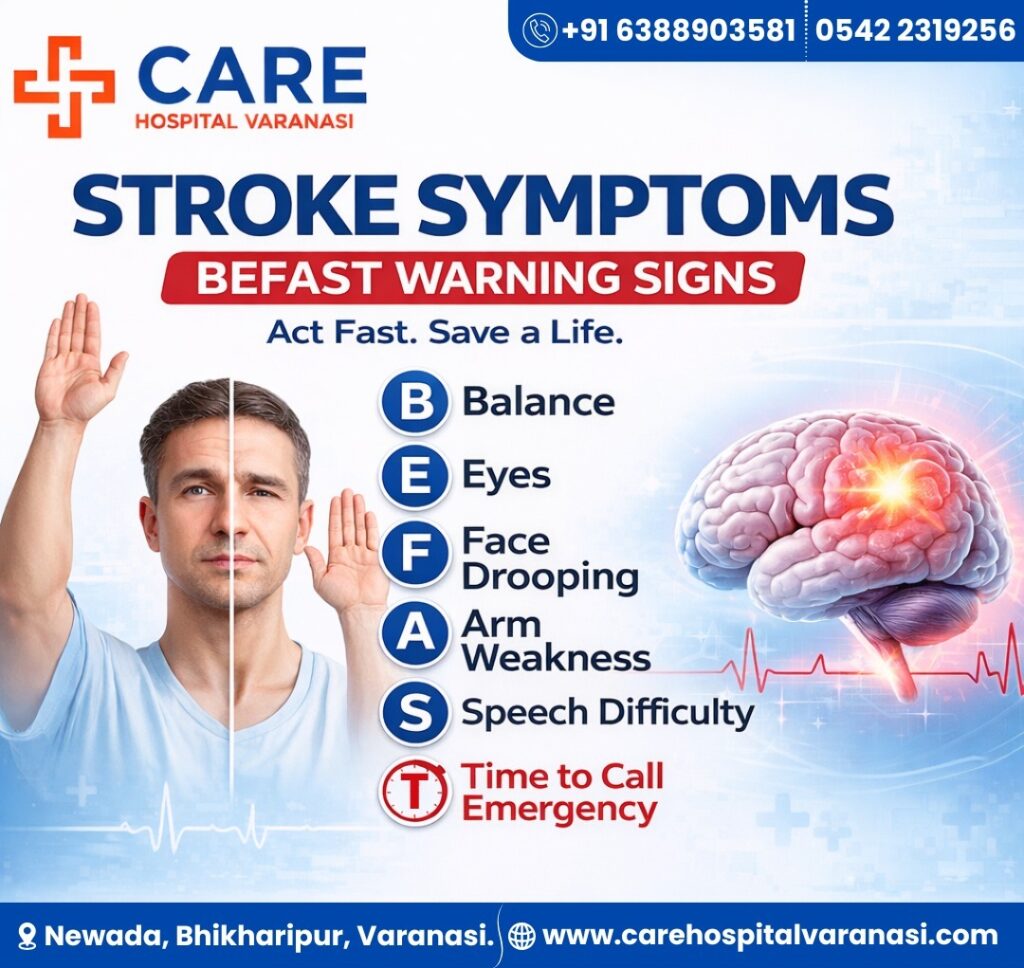
BEFAST is a simple and effective tool used worldwide to recognize the early signs of stroke. It helps patients, caregivers, and family members identify symptoms quickly and take immediate action. Each letter in BEFAST represents a key warning sign.
- Balance : Sudden loss of balance, dizziness, or difficulty walking can be an early indicator of stroke. A person may feel unsteady, experience coordination problems, or find it hard to stand or walk properly without any clear reason.
- Eyes : Stroke can affect vision suddenly. This may include blurred vision, double vision, or partial or complete loss of vision in one or both eyes. Any sudden change in eyesight should be treated as a medical emergency.
- Face : Facial drooping is a common and visible sign of stroke. One side of the face may become weak or numb. When asked to smile, the person’s smile may appear uneven or tilted, indicating possible facial muscle weakness.
- Arms : Arm or leg weakness, especially on one side of the body, is another major warning sign. The person may be unable to lift one arm or may experience sudden numbness or heaviness. This symptom often appears along with facial drooping.
- Speech : Speech problems are a key symptom of stroke. Slurred speech, difficulty speaking, or trouble understanding what others are saying may occur. The person may sound confused or unable to form clear sentences.
- Time : Time is the most critical factor in stroke management. If any of the above symptoms are noticed, immediate medical help is required. Calling emergency services or reaching CARE Hospital Varanasi without delay can help preserve brain function and improve survival rates.
Advanced Stroke Care at CARE Hospital Varanasi
CARE Hospital Varanasi is equipped with experienced doctors, advanced diagnostic facilities, and modern treatment options for stroke care. Our multidisciplinary team focuses on rapid assessment, accurate diagnosis, and timely treatment to reduce brain damage and support recovery. From emergency care to rehabilitation, we provide comprehensive stroke management under one roof.
Stroke Prevention and Long-Term Care
While not all strokes can be prevented, managing risk factors can significantly lower the chances. High blood pressure, diabetes, high cholesterol, smoking, obesity, and a sedentary lifestyle are major contributors to stroke risk. Regular health check-ups, a balanced diet, physical activity, and adherence to prescribed medications play a vital role in prevention. At CARE Hospital Varanasi, we guide patients and families with preventive care and post-stroke rehabilitation for long-term well-being.
Conclusion
A stroke is a life-threatening condition, but early recognition and timely treatment can save lives and reduce disability. The BEFAST method empowers individuals to act quickly and seek immediate medical attention. If you or someone around you shows signs of stroke, do not wait. Reach CARE Hospital Varanasi immediately, where expert care and advanced treatment are available to support faster recovery and better outcomes.