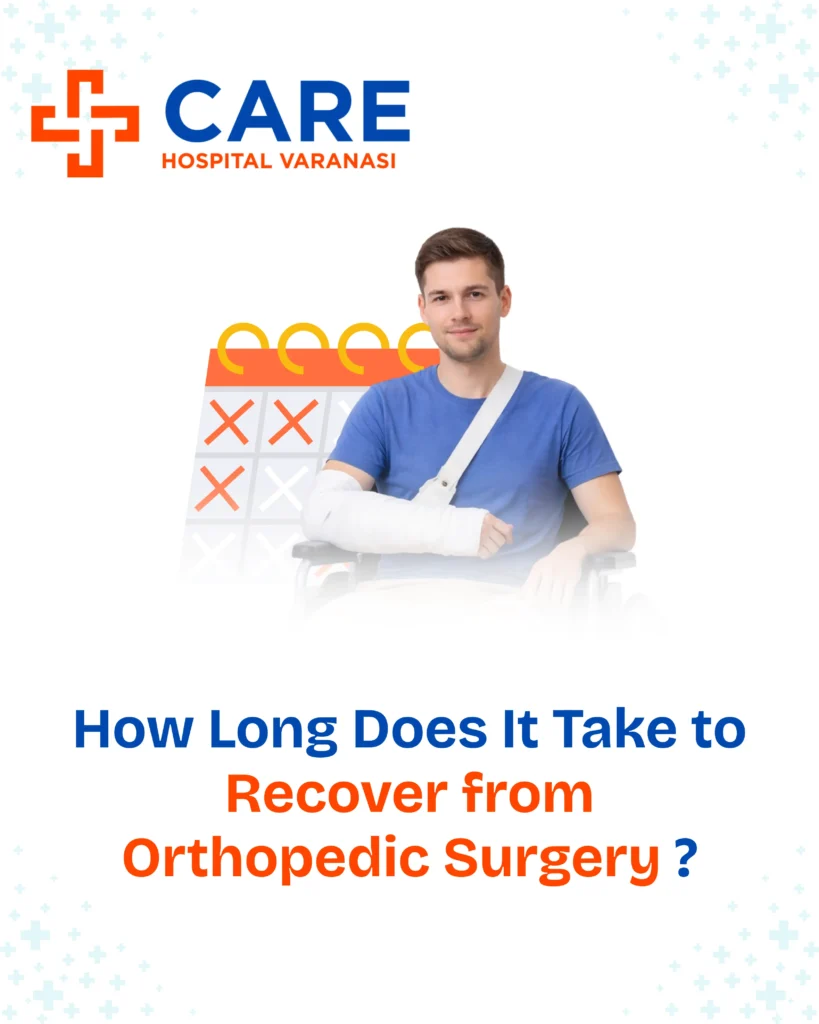
Orthopedic surgery can be a game-changer—whether it’s repairing a torn ligament, replacing a worn-out joint, or fixing a complex fracture. After the procedure, one of the most common questions patients ask is: “How long until I’m back to normal?” The honest answer is that recovery timelines vary widely depending on the type of surgery, your overall health, age, and commitment to rehabilitation. While some people return to light activities in a few weeks, full recovery—regaining strength, mobility, and confidence—often takes months.
Understanding realistic expectations helps reduce anxiety and motivates you to follow your doctor’s plan. In Varanasi and nearby areas like Prayagraj, where access to specialized care is improving, choosing the right facility makes a big difference in your healing journey.
At Care Hospital Varanasi, recognized as one of the best hospitals in Varanasi, our Orthopedic Surgery in Varanasi department, led by specialists like Dr. Chandan Kishore (MBBS, MS Orthopedics), offers personalized recovery plans backed by advanced techniques and multidisciplinary support. This in-depth guide breaks down typical recovery timelines for common orthopedic procedures, factors that influence healing, what to expect week by week, and practical tips to speed up your progress—empowering you with useful knowledge every step of the way.
Why Recovery Times Vary So Much
No two recoveries are identical. Several key factors play a role:
- Type and complexity of surgery: Minimally invasive arthroscopic procedures heal faster than open joint replacements or spinal fusions.
- Age and overall health: Younger, fitter patients often recover quicker. Conditions like diabetes, obesity, smoking, or heart disease can slow healing.
- Pre-surgery fitness level: Strong muscles and good range of motion before surgery lead to better outcomes.
- Adherence to rehab: Physical therapy (PT) is crucial—skipping sessions or not doing home exercises delays progress.
- Nutrition and lifestyle: Protein-rich diets, adequate sleep, hydration, and avoiding smoking/alcohol support tissue repair.
- Complications: Infections, blood clots, or poor wound healing (rare with good care) extend timelines.
- Psychological factors: Motivation, pain management, and support systems influence how well you cope.
Modern advancements like robotic assistance, enhanced recovery protocols (ERAS), and better pain control have shortened many timelines compared to past decades.
Recovery Timelines for Common Orthopedic Surgeries
Here are realistic expectations based on current medical guidelines and patient outcomes (as of 2025–2026 data from orthopedic associations and studies).
1. Arthroscopic Knee or Shoulder Surgery (e.g., Meniscus Repair, Rotator Cuff Repair)
These minimally invasive “keyhole” procedures use small incisions and a camera.
- Immediate post-op: Hospital stay often same-day or 1 day. Walk with crutches or sling.
- Weeks 1–2: Focus on pain control, swelling reduction (ice/elevation), gentle range-of-motion exercises.
- Weeks 3–6: PT intensifies—strength building, partial weight-bearing. Many return to desk work.
- Months 2–4: Gradual return to normal activities; full strength building.
- Full recovery: 3–6 months for daily life; 6–12 months for sports/high-demand activities (e.g., rotator cuff full strength often 6–12 months; simple meniscus 4–8 weeks).
Success rates are high (85–95% satisfaction), with quick return to function.
2. ACL Reconstruction (Knee Ligament Repair)
Common in sports injuries.
- Weeks 1–2: Brace use, crutches, swelling control.
- Weeks 3–6: Weight-bearing progression, basic strength.
- Months 3–6: Advanced PT—balance, agility.
- Months 6–9: Sport-specific training.
- Full recovery: 6–12 months for competitive sports (9–12 typical to avoid re-injury).
Young athletes often hit 9 months before full clearance.
3. Total Knee Replacement (TKR)
For advanced arthritis.
- Day 1–3: Hospital stay; start walking with walker.
- Weeks 1–6: PT daily—aim 90–120° bend; use cane/walker.
- Weeks 6–12: Drive (if right knee, ~6 weeks), most daily activities.
- Months 3–6: Near-normal walking, reduced swelling.
- Full recovery: 3–12 months (most feel great by 6 months; maximal strength/endurance up to 1 year).
Pain relief often dramatic within weeks; 90%+ patients satisfied long-term.
4. Total Hip Replacement (THR)
Often faster than knee due to less complex rehab.
- Day 1–3: Walk same day with assistance.
- Weeks 1–6: Precautions (no crossing legs); PT for strength/mobility.
- Weeks 6–12: Return to most activities; drive ~4–6 weeks.
- Months 3–6: Full strength, low-impact sports.
- Full recovery: 2–6 months for daily life (many active by 3 months; complete by 6).
Hip patients frequently report quicker gains in mobility.
5. Spinal Fusion or Decompression (e.g., for Stenosis, Disc Issues)
Varies by level and approach.
- Minimally invasive: Hospital 1–2 days; light activity in weeks.
- Weeks 1–6: Brace use, walking, basic PT.
- Months 2–4: Gradual increase; fusion process continues.
- Months 6–12: Bone fusion solidifies; return to work/sports.
- Full recovery: 3–12 months (minimally invasive 4–12 weeks; extensive fusion 6–12+ months).
Pain relief from nerve decompression often quick.
6. Fracture Fixation (e.g., Wrist, Ankle, Hip)
Depends on bone and severity.
- Simple fractures: Cast 4–8 weeks; full use 2–4 months.
- Surgical fixation: Weight-bearing progression 6–12 weeks.
- Complex/lower limb: 3–6 months for normal walking; up to 1 year for high-demand.
Healing follows bone biology: inflammation (days), repair (weeks), remodeling (months–years).
Week-by-Week General Recovery Milestones
While timelines differ, a typical pattern emerges:
- Week 1: Hospital discharge, pain/swelling management, rest, gentle exercises.
- Weeks 2–4: Wound healing, start formal PT, mobility aids.
- Weeks 4–8: Increased weight-bearing, strength building, reduce aids.
- Months 2–3: Return to light work/driving (if cleared), advanced PT.
- Months 3–6: Near-normal function, low-impact activities.
- 6+ months: Full strength, high-impact if applicable, long-term maintenance.
Tips to Speed Up and Support Your Recovery
- Follow PT religiously — Consistent exercises rebuild strength and prevent stiffness.
- Manage pain effectively — Use prescribed meds, ice/heat, elevation.
- Eat for healing — Protein (chicken, eggs, lentils), vitamin C/D, calcium, zinc.
- Stay active safely — Walking as allowed promotes circulation.
- Quit smoking — It delays bone/soft tissue healing.
- Maintain healthy weight — Reduces joint stress.
- Attend follow-ups — Catch issues early.
- Use assistive devices — Properly to avoid falls.
- Prioritize sleep — Healing hormones peak at night.
- Seek support — Family, counseling for emotional ups/downs.
Potential Challenges and How to Handle Them
- Stiffness: Daily gentle stretching.
- Swelling: Compression, elevation.
- Fatigue: Normal early on—pace yourself.
- Scar tissue: Massage/PT helps.
- Depression/anxiety: Common—talk to your doctor.
Why Choose Care Hospital Varanasi for Orthopedic Surgery and Recovery?
As the best hospital in Varanasi, Care Hospital integrates advanced surgical techniques with dedicated rehab support. Our Orthopedic Surgery in Varanasi team, including Dr. Chandan Kishore, specializes in joint replacements, arthroscopy, trauma, and spine procedures, using minimally invasive methods for faster healing. With on-site PT, pain management, and multispecialty backup, we guide you from pre-op education through full recovery.
Recovery from orthopedic surgery is a journey—patience and consistency pay off. This guide is informational; your surgeon provides personalized timelines based on your case.
If you’re considering or recovering from orthopedic surgery, contact Care Hospital Varanasi for expert care and support tailored to your needs.