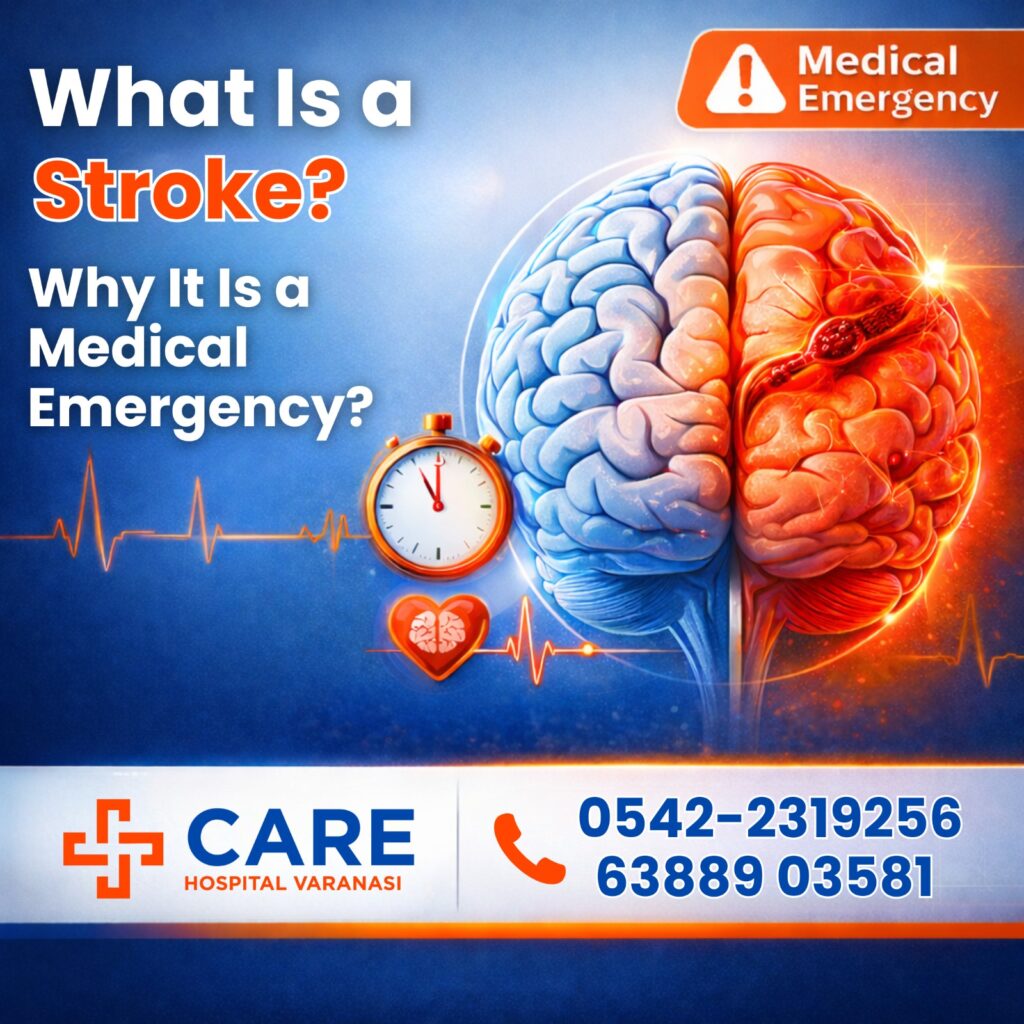
A stroke is a serious and life-threatening medical emergency that occurs when the blood supply to a part of the brain is suddenly interrupted or reduced. When the brain does not receive enough oxygen and nutrients, brain cells begin to die within minutes. Prompt medical attention can save lives, reduce brain damage, and improve recovery outcomes.
At Care Hospital Varanasi, we emphasize early detection, rapid treatment, and comprehensive rehabilitation to help stroke patients return to a healthy and independent life.
Understanding Stroke
The brain controls vital functions such as movement, speech, memory, and breathing. It requires a constant supply of oxygen-rich blood to function properly. A stroke happens when this blood flow is either blocked or when a blood vessel in the brain ruptures, leading to damage of brain tissue.
Stroke can affect people of all ages, but the risk increases with age and certain lifestyle or medical conditions. Recognizing the early signs of stroke and seeking immediate medical help is crucial.
Types of Stroke
There are three main types of stroke, each with different causes and treatment approaches.
Ischemic Stroke
An ischemic stroke is the most common type of stroke. It occurs when a blood vessel supplying the brain is blocked by a blood clot or fatty deposits known as plaque. This blockage prevents oxygen from reaching the brain.
Common causes include:
- Narrowed arteries due to cholesterol buildup
- Blood clots formed in the heart or blood vessels
- Irregular heartbeat such as atrial fibrillation
Hemorrhagic Stroke
A hemorrhagic stroke occurs when a weakened blood vessel ruptures and bleeds into the brain. The bleeding puts pressure on brain tissues and causes damage.
Common causes include:
- Uncontrolled high blood pressure
- Brain aneurysm
- Head injury
- Blood-thinning medications
Transient Ischemic Attack (TIA)
A Transient Ischemic Attack, often called a mini-stroke, is caused by a temporary blockage of blood flow to the brain. Symptoms usually last only a few minutes to hours and resolve completely.
Although symptoms disappear, a TIA is a serious warning sign of a future major stroke and requires immediate medical evaluation.
Causes and Risk Factors of Stroke
Several medical conditions and lifestyle factors increase the risk of stroke.
Medical Risk Factors
- High blood pressure
- Diabetes
- High cholesterol
- Heart disease
- Irregular heart rhythm
- Previous stroke or TIA
Lifestyle Risk Factors
- Smoking and tobacco use
- Excessive alcohol consumption
- Physical inactivity
- Obesity
- Unhealthy diet high in salt and fat
- Chronic stress
Managing these risk factors significantly reduces the chances of having a stroke.
Common Symptoms of Stroke
Stroke symptoms often appear suddenly and worsen quickly. Knowing these warning signs can save a life.
Common symptoms include:
- Sudden numbness or weakness of the face, arm, or leg, especially on one side of the body
- Difficulty speaking or understanding speech
- Sudden confusion
- Trouble seeing in one or both eyes
- Severe headache with no known cause
- Loss of balance or coordination
- Dizziness or difficulty walking
BE FAST: An Easy Way to Recognize Stroke
The BE FAST method helps identify stroke symptoms quickly:
- B – Balance: Sudden loss of balance or coordination
- E – Eyes: Sudden vision problems
- F – Face: Face drooping on one side
- A – Arms: Weakness in one arm
- S – Speech: Slurred or difficult speech
- T – Time: Time to call emergency medical services immediately
If you notice any of these signs, seek emergency care without delay.
Diagnosis of Stroke
At Care Hospital Varanasi, stroke diagnosis involves a combination of clinical examination and advanced imaging tests, such as:
- CT scan or MRI of the brain
- Blood tests
- ECG and echocardiography
- Carotid ultrasound
Early diagnosis helps doctors determine the type of stroke and begin appropriate treatment quickly.
Treatment Options for Stroke
Stroke treatment depends on the type, severity, and timing of symptoms.
Treatment for Ischemic Stroke
- Clot-busting medications administered within a specific time window
- Mechanical thrombectomy to remove large clots
- Blood-thinning medications
Treatment for Hemorrhagic Stroke
- Blood pressure control
- Medications to stop bleeding
- Surgery to repair damaged blood vessels or relieve pressure
Rehabilitation After Stroke
Stroke rehabilitation is essential for recovery and may include:
- Physiotherapy
- Speech and language therapy
- Occupational therapy
- Psychological counseling
Early rehabilitation improves mobility, speech, and quality of life.
Preventing Stroke
Many strokes can be prevented by making healthy lifestyle choices and managing medical conditions.
Effective prevention measures include:
- Keeping blood pressure under control
- Managing diabetes and cholesterol
- Eating a balanced, low-salt diet
- Exercising regularly
- Avoiding smoking and excessive alcohol
- Maintaining a healthy body weight
- Regular health check-ups
When to Seek Medical Help
Stroke is a medical emergency. Every minute counts. If you or someone around you experiences sudden neurological symptoms, seek immediate medical care.
At Care Hospital Varanasi, our emergency and neurology teams are equipped with advanced facilities to provide timely stroke care, diagnosis, and rehabilitation under expert supervision.
Conclusion
A stroke can change life in an instant, but early recognition, fast treatment, and proper rehabilitation can significantly improve outcomes. Understanding the causes, symptoms, and prevention strategies is the first step toward protecting yourself and your loved ones.
If you notice any signs of stroke, do not delay. Visit Care Hospital Varanasi for expert stroke care, advanced treatment options, and compassionate support focused on recovery and long-term health.