Stroke is one of the leading causes of death and disability worldwide, affecting millions of lives each year. In India alone, strokes claim over 1.8 million lives annually, according to recent health reports. But what exactly is a stroke? It’s a medical emergency where blood flow to the brain is interrupted, either by a blockage (ischemic stroke) or a burst blood vessel (hemorrhagic stroke). This interruption can lead to brain cell damage, resulting in long-term issues like paralysis, speech difficulties, or cognitive impairments. At Care Hospital in Varanasi, we see firsthand the impact of strokes on families and communities, which is why education is key to prevention and timely intervention.
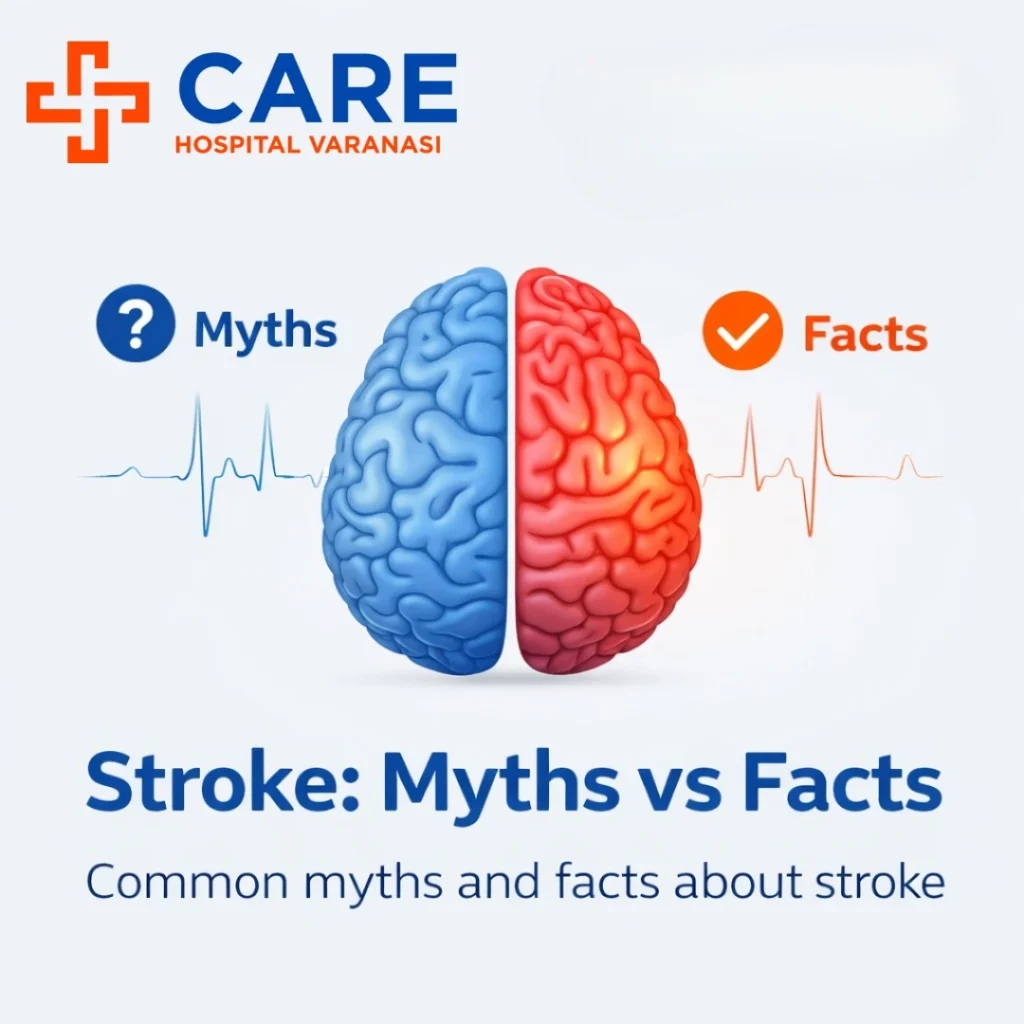
In this comprehensive article, we’ll dive deep into the world of stroke myths vs facts. Many people harbor misconceptions about strokes that can delay treatment or prevent proactive health measures. By debunking these common myths about stroke with evidence-based facts, we aim to empower you with knowledge that could save lives. Whether you’re in Varanasi or elsewhere, understanding the truth behind strokes is crucial. We’ll cover everything from causes and symptoms to prevention strategies, all while ensuring this information is accessible and actionable. Let’s separate fiction from reality and explore how you can protect yourself and your loved ones.
What Causes a Stroke? A Quick Overview Before Debunking Myths
Before we tackle the myths, it’s essential to understand the basics. Strokes occur when the brain doesn’t get enough oxygen and nutrients due to disrupted blood supply. Risk factors include high blood pressure, diabetes, smoking, obesity, and high cholesterol. Lifestyle choices play a huge role, and in urban areas like Varanasi, where stress and pollution add to the mix, awareness is even more vital.
At Care Hospital in Varanasi, our neurology team specializes in stroke care, offering advanced diagnostics like CT scans and MRI to identify issues early. But misinformation often clouds judgment. Let’s address the most prevalent myths one by one.
Myth 1: Strokes Only Happen to Elderly People
One of the most persistent common myths about stroke is that it’s exclusively a disease of the old. Many believe that if you’re under 50, you’re safe from this condition. This couldn’t be further from the truth.
Fact: Strokes Can Strike at Any Age
Strokes don’t discriminate by age. While it’s true that the risk increases with age—about 75% of strokes occur in people over 65—younger adults and even children can experience them. In fact, according to the World Health Organization (WHO), around 10-15% of strokes happen in individuals under 50. Factors like genetic predispositions, congenital heart defects, or lifestyle issues such as drug abuse and poor diet can trigger strokes in younger populations.
Consider the rise in “young strokes” linked to modern lifestyles. In India, sedentary jobs, fast food consumption, and increasing stress levels are contributing to a surge in cases among the 30-40 age group. A study published in the Indian Journal of Medical Research highlighted that urban youth in cities like Varanasi are at higher risk due to uncontrolled hypertension and diabetes.
At Care Hospital in Varanasi, we’ve treated patients as young as 25 who suffered strokes due to undiagnosed conditions. Early detection through routine check-ups can make all the difference. If you experience sudden weakness or confusion, regardless of age, seek immediate medical help. Remember, time is brain—every minute counts in stroke recovery.
Myth 2: Strokes Are Not Preventable
Another widespread misconception is that strokes are inevitable, especially if they run in the family. People often think, “If my parents had it, I’ll get it too—no point in trying to prevent it.”
Fact: Up to 80% of Strokes Are Preventable Through Lifestyle Changes
The good news is that prevention is possible and highly effective. The American Heart Association estimates that 80% of strokes can be avoided by managing modifiable risk factors. This includes controlling blood pressure (the number one cause), quitting smoking, maintaining a healthy weight, and exercising regularly.
In Varanasi, where traditional diets rich in ghee and sweets can lead to high cholesterol, simple changes like incorporating more fruits, vegetables, and whole grains can lower risks. Regular physical activity, such as walking along the ghats or practicing yoga, can improve cardiovascular health. Additionally, medications for conditions like atrial fibrillation can prevent clot formation.
Facts about stroke prevention also emphasize the role of regular screenings. At Care Hospital in Varanasi, our preventive health packages include blood tests and ECGs to catch risks early. Don’t wait for symptoms; proactive steps today can avert a crisis tomorrow.
Myth 3: Stroke Symptoms Always Include Severe Pain
Many people associate strokes with intense headaches or pain, similar to a heart attack. This myth leads to ignoring subtle signs, delaying critical treatment.
Fact: Most Strokes Are Painless, But Symptoms Are Sudden and Noticeable
Contrary to popular belief, pain is not a hallmark of strokes. Ischemic strokes, which account for 87% of cases, often present without any pain. Instead, look for the FAST signs: Face drooping, Arm weakness, Speech difficulty, and Time to call emergency services.
Other symptoms include sudden numbness, confusion, vision problems, or loss of balance. Hemorrhagic strokes might involve headaches, but even then, it’s not always severe. The key is the sudden onset—symptoms appear out of nowhere.
In India, where awareness is low, many dismiss these as “just tiredness.” A survey by the Indian Stroke Association found that only 40% of urban residents recognize all FAST symptoms. Educating communities in places like Varanasi is vital. If you or a loved one experiences these, rush to a facility like Care Hospital, equipped with a 24/7 stroke unit for thrombolysis treatment within the golden hour (4.5 hours from onset).
Myth 4: If Stroke Symptoms Go Away Quickly, It’s Not Serious
Ever heard of a “mini-stroke”? Some think if symptoms resolve on their own, it’s no big deal and doesn’t require medical attention.
Fact: Transient Ischemic Attacks (TIAs) Are Warning Signs of a Major Stroke
A TIA, often called a mini-stroke, is a temporary blockage causing stroke-like symptoms that last minutes to hours. But it’s a red flag—up to 15% of people who have a TIA will suffer a full stroke within three months, per the National Institute of Neurological Disorders and Stroke.
Ignoring a TIA is risky. It indicates underlying issues like narrowed arteries. Treatment might involve antiplatelet drugs or surgery to clear blockages.
At Care Hospital in Varanasi, we emphasize post-TIA care with follow-up imaging and lifestyle counseling. Don’t brush it off; it’s your body’s alarm system.
Myth 5: Strokes Only Affect the Brain and Recovery Is Impossible
The idea that strokes are solely brain-related and lead to permanent disability discourages many from seeking rehabilitation.
Fact: Strokes Impact the Whole Body, But Recovery Is Possible with Timely Intervention
Strokes affect motor skills, speech, and emotions, but recovery varies. With rehabilitation, many regain independence. Neuroplasticity allows the brain to rewire itself.
Facts show that 50-70% of survivors achieve functional independence within a year, according to rehab studies. Therapies like physiotherapy, speech therapy, and occupational therapy are crucial.
In Varanasi, Care Hospital offers multidisciplinary rehab programs tailored to stroke patients, including psychological support for depression, which affects 30% of survivors.
Myth 6: Women Are Less Likely to Have Strokes Than Men
Gender myths persist, with some believing strokes are a “man’s disease” due to higher heart disease rates in men.
Fact: Women Face Equal or Higher Risks, Especially Post-Menopause
Women account for 60% of stroke deaths in the US, and similar trends exist in India. Hormonal changes, pregnancy complications, and longer lifespans increase risks. Migraines with aura and birth control pills add to it.
A Lancet study noted higher stroke incidence in Indian women over 55. Awareness campaigns target this demographic.
Care Hospital in Varanasi runs women-specific health camps focusing on stroke risks, integrating gynecology insights.
Myth 7: Aspirin Can Treat a Stroke at Home
Self-medication myths are dangerous, like taking aspirin during suspected stroke symptoms.
Fact: Aspirin May Help Prevent Strokes But Not Treat Active Ones Without Medical Advice
Low-dose aspirin prevents clots in at-risk individuals, but during a stroke, it could worsen hemorrhagic types. Always consult a doctor.
Emergency protocols involve professional assessment. At Care Hospital, our protocols ensure safe administration.
Myth 8: Strokes Are Hereditary and Unavoidable
Family history is often blamed entirely, leading to fatalism.
Fact: Genetics Play a Role, But Lifestyle Trumps Inheritance
While genes influence 20-30% of risk, environment and habits matter more. Managing shared family risks like hypertension can break the cycle.
Genetic testing at advanced centers like Care Hospital helps personalize prevention.
Myth 9: Alternative Therapies Can Cure Strokes Better Than Modern Medicine
Some turn to herbs or acupuncture, dismissing hospitals.
Fact: Evidence-Based Medicine Is the Gold Standard, Though Complementary Therapies Can Aid Recovery
Ayurveda might support wellness, but acute strokes need IV thrombolysis or surgery. Integrative approaches work best under supervision.
In Varanasi, blending traditions with science at Care Hospital yields better outcomes.
Myth 10: Strokes Don’t Happen to Healthy People
The “I’m fit, so I’m safe” myth ignores hidden risks.
Fact: Even Athletes Can Have Strokes Due to Undetected Conditions
Arrhythmias or aneurysms can strike anyone. Regular check-ups are essential.
Care Hospital promotes annual screenings for all.
Additional Facts About Stroke Prevention and Management
Beyond myths, here are key facts:
- Diet: Mediterranean-style eating reduces risk by 30%.
- Exercise: 150 minutes weekly lowers incidence.
- Monitoring: Home BP checks prevent surprises.
- Vaccination: Flu shots reduce stroke risk in vulnerable groups.
In Varanasi’s humid climate, hydration is crucial to avoid dehydration-related clots.
How Care Hospital in Varanasi Supports Stroke Care
At Care Hospital, we’re committed to comprehensive healthcare. Our stroke unit features state-of-the-art tech and expert neurologists. We also offer related services to ensure holistic well-being. For instance, maintaining oral health can prevent infections that exacerbate stroke risks—check out our Dental Hospital in Varanasi for top-notch care. Similarly, for minimally invasive procedures that might address underlying vascular issues, explore our Laparoscopic Surgery in Varanasi.
Conclusion: Empower Yourself with Knowledge
Debunking these common myths about stroke reveals that knowledge is power. Strokes are serious but largely preventable and treatable with prompt action. By understanding the facts, you can take charge of your health. If you’re in Varanasi, visit Care Hospital for consultations or emergencies. Remember, awareness saves lives—share this article and stay vigilant.